


From his residence in Bosnia, Stimac was candid as he expressed his feelings about Zrinjski Mostar’s triumph over fierce rivals Velez Mostar, a victory that has kept his squad in contention for the WWIN Liga title.
“Winning matches like these demands more than just quality players on the pitch; once again this season we’ve found ourselves competing against 14 men,” Stimac stated, pointing to what he perceives as biased officiating.
This season has already been fruitful for both Stimac and Zrinjski. The former Croatian international, who earned a bronze medal at the 1998 World Cup, stepped into the managerial position last summer and successfully led the team through the Conference League league phase, ultimately exiting in the play-off round against Crystal Palace.
This role marks a return to club management for Stimac after an eight-year hiatus. He previously charted a different course, serving as head coach for India’s national team from 2019 to 2024, as well as coaching in Iran and Qatar.
When asked why he chose to manage in Mostar, he responded, “I missed doing the job I love.”
“The opportunity came at the perfect time when I was available. Naturally, it was not akin to my previous five and a half years with the Indian national team.”
“It’s a completely different role because it’s day-to-day; you engage with the players and can exert a greater influence on your team, your ideas, and everything you have planned.”
“I was quite thrilled, particularly since it’s been since the 2004-2005 season that I’ve returned to club management with a team that harbours aspirations for titles and trophies, like Hajduk Split.”
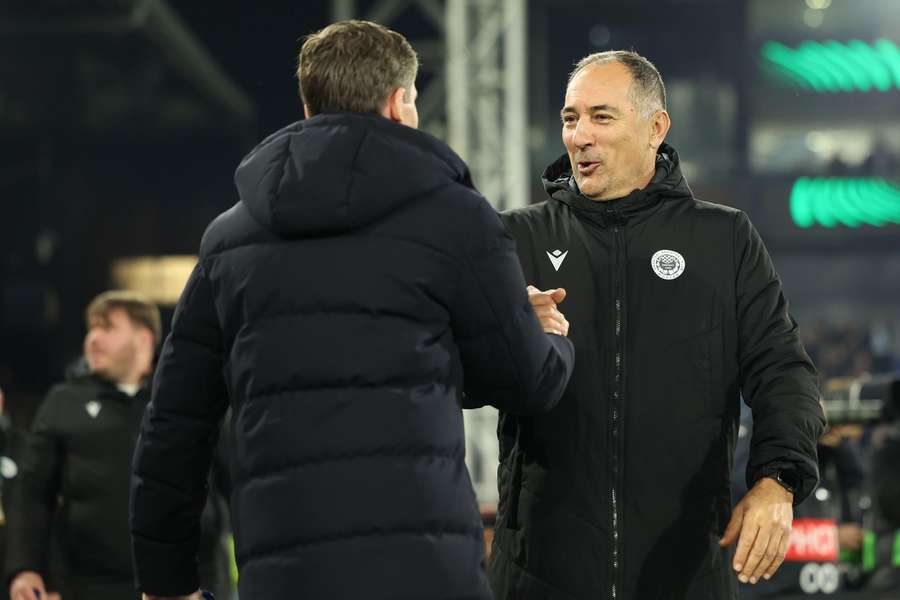
During his tenure, Zrinjski has already secured silverware, triumphing in the Bosnian Super Cup and remaining frontrunners to claim the domestic cup before the season concludes.
With nine matches remaining in the league, Stimac’s squad finds themselves nine points adrift of league leaders Borac Banja Luka. Despite the slim chances of clinching the title, the 58-year-old still considers the season a success for the club, even without a second consecutive league title.
He remarked: “We’ve made history by qualifying for the Conference League (group stage) and playing against Crystal Palace, having two incredible matches against a team valued 100 times more than us.
“Our team is valued at 5-6 million while Crystal Palace is 550 million. It was a remarkable experience for my players to see that we could compete, create chances, and put them under pressure.”
“Moreover, after winning the Super Cup in Bosnia, we’re in the semi-finals of the FA Cup here and still pushing to close the gap in the league.”
“Overall, I would label it a very successful season, given the limited resources we’ve had and the hurdles we’ve faced, since every team gives their utmost when facing the best in the league.”
Fond Premier League Memories
For many, seeing Stimac on the sidelines at Selhurst Park earlier this year evoked a sense of nostalgia. Known for his robust defensive style during his playing days, he is best remembered for his time at Derby County and West Ham United.
At Derby, he played a crucial role in their promotion to the Premier League under manager Jim Smith, sharing the pitch with talents such as Paulo Wanchope, which included a stunning unbeaten streak during their first season at the club.
Following 84 appearances in four seasons, a transfer to Upton Park ensued, where he reunited with Wanchope and competed in one of England’s most thrilling squads. During an era labelled as a ‘golden generation’ for the Hammers, Stimac witnessed the emergence of Rio Ferdinand, Joe Cole, Jermain Defoe, Michael Carrick, and notably, Frank Lampard.
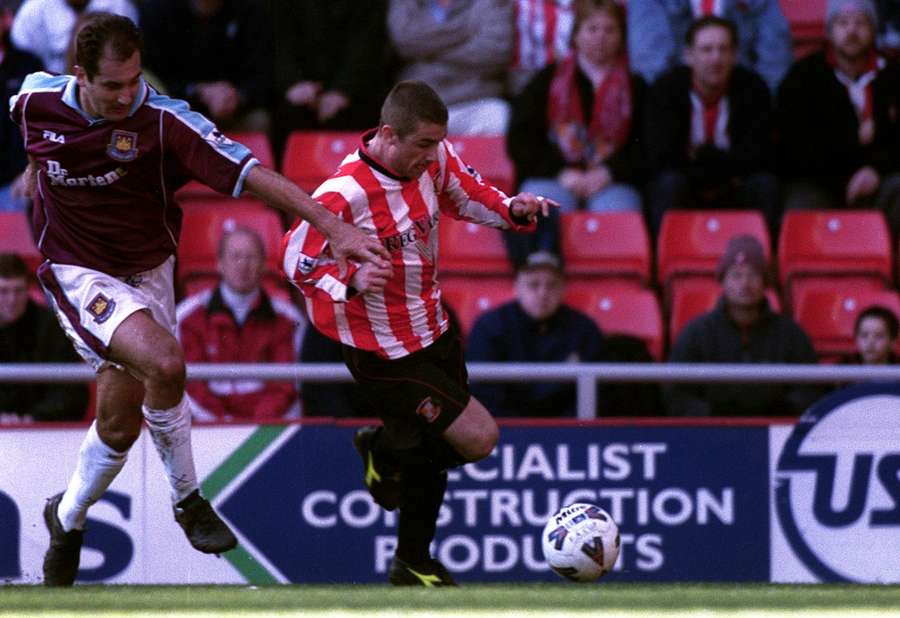
Reflecting on his time in England, Stimac shared, “My four years at Derby County were the pinnacle of my career, especially during that period which included EURO 96 and France 1998, where I earned medals.”
“When I joined Derby County during the 1995-96 season, they were struggling in 17th place after 17 games, and my debut couldn’t have gone worse as we lost to Tranmere away.
“However, we soon launched a remarkable unbeaten streak; on Boxing Day, we triumphed 3-1 against Sunderland at home, seizing top spot in the league. We went from a club with plans to simply refurbish the West End at the old Baseball Ground to enacting exciting new developments, such as acquiring new land, a new stadium, and a new training ground, while also playing attractive football with many talented players.”
“We had fantastic leadership, and our young coach at the time, Steve McLaren, was exceptional.”
“You could sense right away he was destined for a successful coaching career, as we were pioneers in applying new technologies in football.”
“We might have been among the first clubs to implement sports psychology, and I recall a rehabilitation room outfitted with 25 chairs for tactical discussions and recovery sessions, highlighting the substantial tactical shifts driven by our assistant coach.”
“Jim Smith’s trust in Steve McLaren was crucial for us.”
“Then at West Ham, I was fortunate to play alongside young talents like Rio Ferdinand, Frank Lampard, and Michael Carrick, with emerging players like Joe Cole and Jermain Defoe joining our training sessions.”
“On the flip side, I also had the experience of playing with established stars such as Paolo Di Canio and Trevor Sinclair, and those were truly memorable times filled with captivating football. It was a pleasure to witness those matches.”
Tudor’s Difficult Time
Nevertheless, the highlight of his playing career came while representing the national team. Croatia made an unforgettable impact in their inaugural World Cup as an independent nation in 1998, defeating Germany and Romania on their journey to the semi-finals, where they fell to the eventual champions, France, but managed to secure bronze by beating the Netherlands.
Among the talented players on that team was a young defender named Igor Tudor.
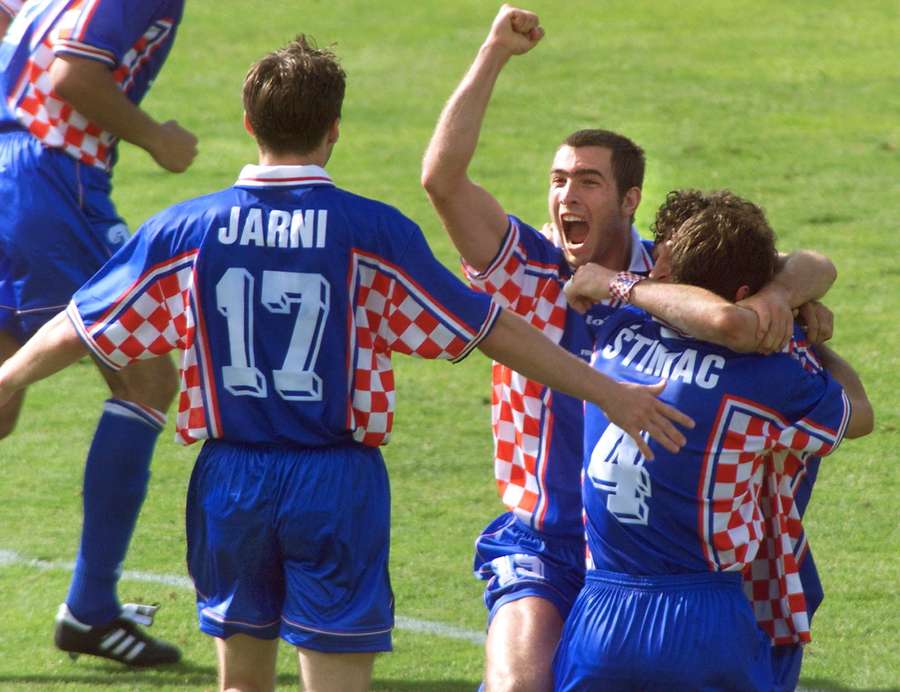
Recently, Tudor has faced heartbreaking challenges. After managing just one point from five Premier League matches at Tottenham Hotspur, he was released from his position by mutual agreement. Additionally, he suffered the loss of his father during this tumultuous period, and Stimac extends his sympathy to his friend during this difficult time.
“He’s navigating an incredibly tough period, having been very close to his father, and his passing was wholly unexpected,” said Stimac.
“I reached out to offer my condolences but regrettably couldn’t attend the funeral. However, I remained in contact with him during his time at Tottenham, particularly as Igor served as my assistant when I was head coach of the Croatian national team.”
“He accepted a challenging situation at Tottenham, taking over amidst numerous injuries and players displaying questionable body language, failing to inspire confidence.”
“Such circumstances cannot be resolved overnight, regardless of your reputation as a coach; it takes time. So, I question whether he genuinely needed to take on that role. In honesty, I wouldn’t have accepted it without assurance of a couple of years to implement a plan, even if relegation ensued.”
“You’re taking on a situation someone else created, and you become a casualty of the circumstances, especially considering the schedule they faced.”
“They engaged Tudor, anticipating he would replicate his past short-term successes, but football management doesn’t always operate that way.”
“Managing a significant club like Tottenham with the expectations of its dedicated fanbase, especially given the recent difficulties following Levy’s departure, adds to the pressure.”
Management in football is challenging at any level. While it offers certain privileges, it also carries pressures and pitfalls that many don’t encounter daily.
Stimac, having managed both club and national teams—including Hajduk Split and the Croatian national side, as well as more unconventional roles with India’s national team and Sepahan in Iran’s Persian Gulf Pro League—finds himself in a unique position. He believes that adapting to life away from home is essential and urges coaches to embrace challenges beyond their comfort zones.
He concluded: “The ability to adapt to different cultures and philosophies is vital, enabling you to change in ways that others can understand and accept you.”
“If you’re proficient in English, navigating various contexts becomes far simpler. Spanish, Italian, French, and German cover Europe, as the cultures are somewhat aligned; significant differences often lie in food. But when it comes to other continents, such as Africa and Asia, the challenges intensify.”
“Many notable German coaches, for instance, have ventured to Iran only to leave after a few months, underestimating the need for adaptation, which simply won’t work.”
Compiled by SportArena.au
Fanpage: SportArena.au.
LiveScore – Live Sports Results & Odds.
