


From his residence in Bosnia, Stimac candidly shares his thoughts on Zrinjski Mostar’s significant win against arch-rivals Velez Mostar, a result that has kept his team firmly in the race for the WWIN Liga title.
“Winning matches like this requires more than just talent on the pitch. Once again this season, we’ve faced challenges with officiating that feels like playing against 14 men,” Stimac remarked, voicing his frustration over perceived unfair refereeing.
This season has already been a triumph for both Stimac and Zrinjski. The former Croatian international, who secured a bronze medal at the 1998 World Cup, stepped into the managerial role last summer and successfully led his team through the Conference League league phase, ultimately losing to Crystal Palace during the playoffs.
His appointment marked a return to club management after an eight-year hiatus. Having spent five years as head coach for India between 2019 and 2024, he also gained experience managing teams in Iran and Qatar.
When asked why he chose to take the position in Mostar, Stimac reflected: “I realised how much I missed my job— the job that I am passionate about.” He added, “The opportunity arose at just the right moment for me. Naturally, it was quite a departure from my previous five and a half years with the Indian national team.”
“This role is completely different. It’s a daily engagement with the players, where you can exert a greater influence on your team, your ideas, and everything you envision.
“I was truly excited, especially since my last stint in club management was back in 2004-2005 with Hajduk Split, a club with ambitions for titles and trophies.”
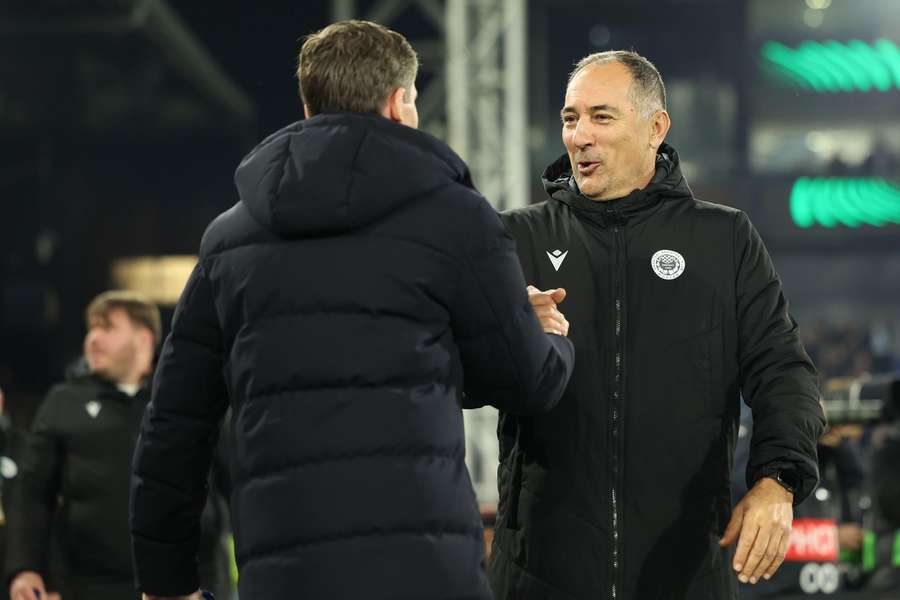
During his tenure, Stimac has already secured silverware for Zrinjski, winning the Bosnian Super Cup and positioning themselves as strong contenders for the domestic cup before the season wraps up.
With nine league rounds remaining, Zrinjski sits nine points adrift of leaders Borac Banja Luka. While their title aspirations may seem slim, the 58-year-old coach views this season as a success for the club, regardless of whether they can repeat last season’s title win.
He elaborated, “We made history by qualifying for the Conference League’s league phase and competing against Crystal Palace, a team whose valuation is vastly higher than ours.
“Our squad’s worth is around 5-6 million while Crystal Palace boasts a valuation of about 550 million. The experience of playing against them, creating chances and challenging them was remarkable for my players.
“Moreover, after clinching the Super Cup here in Bosnia, we’ve advanced to the semi-finals of the FA Cup, while also striving to assert ourselves in the championship race.
“This season has been very successful, especially considering our limited resources and the challenges we’re facing as the team at the top of the league—everyone plays against us with maximum effort.”
Memories of the Premier League
For many, seeing Stimac on the sideline at Selhurst Park earlier this year would undoubtedly have stirred nostalgic feelings. Known for his uncompromising defending during his playing career, he is perhaps best remembered for his time at Derby County and West Ham.
At Derby, he played an instrumental role in the team’s promotion to the Premier League under manager Jim Smith, contributing to an impressive unbeaten streak in their first season.
A subsequent move to Upton Park saw him reunite with Wanchope, and he became part of one of the most exhilarating squads in England at that time. During what was regarded as a ‘golden generation’ for the Hammers, Stimac witnessed the emergence of talents like Rio Ferdinand, Joe Cole, Jermain Defoe, Michael Carrick, and notably, Frank Lampard.
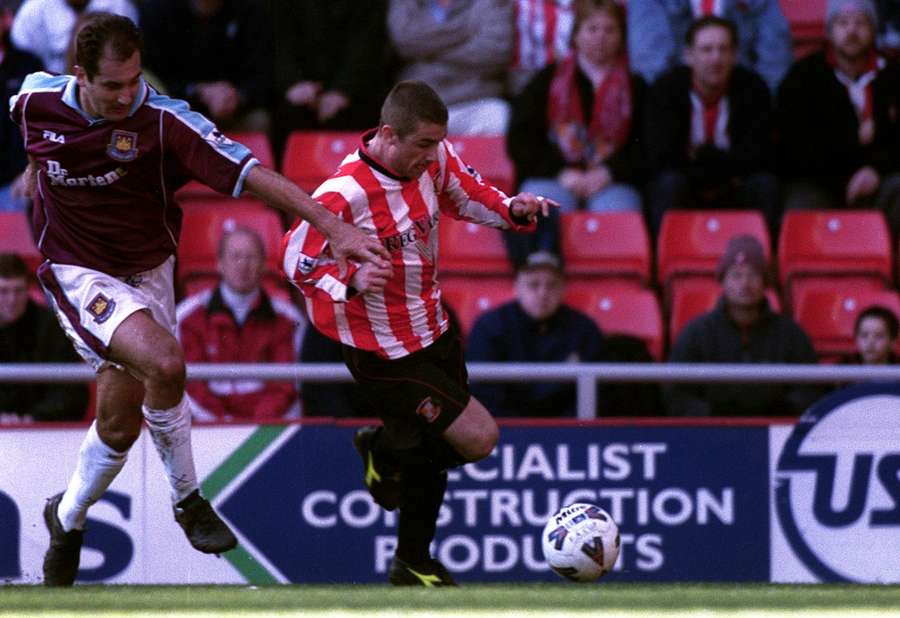
Recalling his time spent in England, Stimac expressed: “The four years at Derby County were undoubtedly the peak of my career. It was during that time that we had significant tournaments like EURO 96 and the 1998 World Cup, where I attained medals.”
“I joined Derby when they were in 17th position after 17 games in the 1995-96 season, and I still remember my debut, which ended badly as we lost to Tranmere away. However, we went on to have an extraordinary unbeaten streak of 20 games; by Boxing Day, we’d beaten Sunderland 3-1 to take the top spot in the league. This led to substantial changes at the club, including new plans for a stadium and training facilities, marked by a shift from just refurbishing the West End at the old Baseball Ground to significant growth and playing attractive football.”
“Our management was outstanding, with a brilliant young coach, Steve McLaren, who was initially an assistant to Jim Smith.”
“Steve was exceptional. You could see from an early stage that he had the potential to rise to the top of coaching, particularly because we were among the first clubs to embrace new technologies in football.”
“We likely introduced sports psychologists, and we had a comprehensive rehabilitation room for tactical discussions and recovery sessions. It was evident that the assistant coach’s approach transformed the club tactically and in every aspect.
“The trust that Jim placed in Steve during that time was crucial for us.”
“Two great years followed at West Ham United; what can I say? I was part of a team filled with young talents like Rio Ferdinand, Frank Lampard, Michael Carrick, and even a young Joe Cole starting out, as well as Jermain Defoe who joined us at training and made his debut.
“On the flip side, players like Paolo Di Canio and Trevor Sinclair were present, and those were truly remarkable years. We played fantastic, enthralling football that became a joy to witness.”
Tudor’s Struggles
While his best years were spent representing his national side, Croatia made an indelible mark on the footballing world during the 1998 World Cup— their first as an independent nation following the collapse of Yugoslavia. They enjoyed a remarkable journey, defeating Germany and Romania before reaching the semi-finals, where they lost to the eventual champions, France, but went on to secure third place against the Netherlands.
The squad was filled with exceptional talent, including Davor Suker, along with a youthful defender named Igor Tudor.
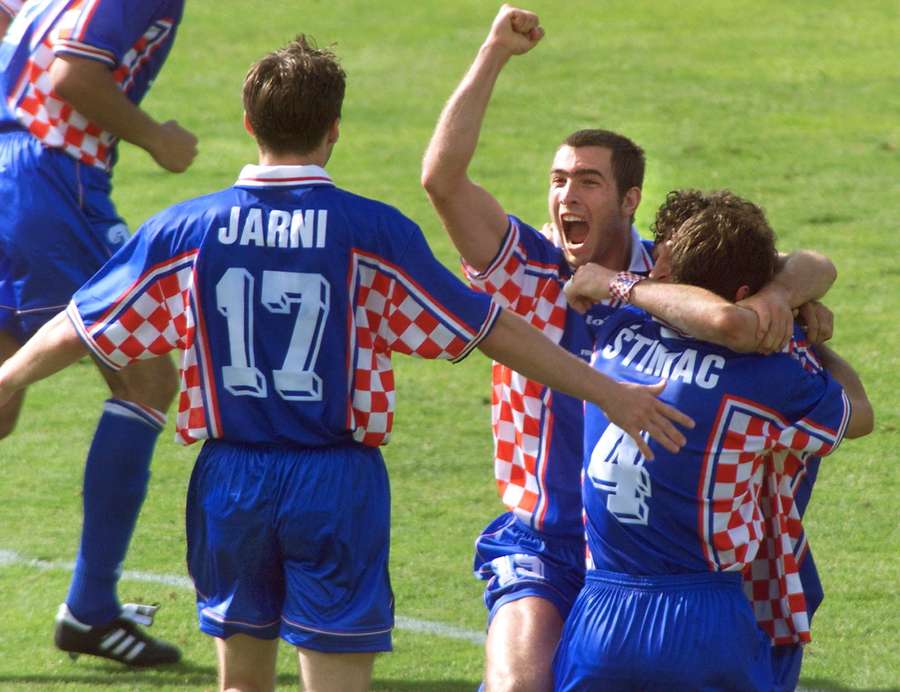
Recent weeks have been particularly challenging for Tudor, who after securing just one point from five Premier League matches as Tottenham Hotspur’s manager, parted ways with the club. To compound matters, he also lost his father during this time, prompting his former teammate to express sympathy for his friend.
“He’s facing a very difficult period. He was very close to his father, and his passing was unexpected,” he shared.
“I reached out to him to express my condolences and regretfully was unable to attend the funeral. Throughout his time at Tottenham, I kept in touch since Igor was my assistant when I served as the Croatian national team’s head coach.”
“He accepted a challenging situation when he took the job, facing numerous injuries and players with poor body language who were lacking in confidence. It’s a tough position to be in, and one that can’t be resolved overnight; regardless of one’s name or coaching talent, it’s a process.”
“I think it was a risky move for him. Had I been in his position, I would have sought assurances for a fair trial, even if that meant facing relegation; it shouldn’t fall entirely upon your shoulders. It takes time to build a strong squad, especially under challenging conditions.”
“The situation he faced was shaped by decisions made long before he arrived, and he ended up being a victim of those circumstances, compounded by the taxing schedule they had.”
While football management at any level is fraught with challenges, it’s also a position filled with privilege and responsibility, something many in everyday life will never experience.
Stimac finds himself in a distinctive position, having led both club and national teams, from Hajduk Split and Croatia to more unconventional choices like India and Sepahan in Iran’s Persian Gulf Pro League.
Success often hinges on adapting to life abroad, and Stimac believes that more coaches should venture outside their comfort zones to embrace new challenges.
He concluded, “Being able to adapt to different cultures and philosophies is crucial; you must be willing to change yourself so others can understand and accept you.
“If you speak English, you can navigate your way around the globe. Other languages like Spanish, Italian, French, and German are vital for Europe. While cultural differences may exist, in terms of food and way of life, it’s primarily a challenge when venturing into regions like Africa or Asia.”
“Many coaches expect to be catered to when they move to different cultures— for instance, German coaches in Iran— and often find themselves unable to cope after a couple of months. Adaptation is essential.”
Compiled by SportArena.au
Fanpage: SportArena.au.
LiveScore – Live Sports Results & Odds.
