


There’s a well-known saying: live sport has always been, and will always be, the pinnacle of reality TV.
Golf is not short on drama—just consider Greg Norman’s infamous collapse at the 1996 Masters, Rory McIlroy’s missed putt at the 2024 US Open, and his heartfelt comeback win at last year’s Masters.
Yet, the departure of numerous top players to LIV Golf deprived the PGA Tour of a vital ingredient essential for generating authentic, unscripted sporting tales: rivalry.
However, the much-anticipated returns of former LIV stars Patrick Reed and Brooks Koepka have afforded the PGA Tour a unique chance to significantly rethink its marketing strategies and elevate the sport of golf as a whole.
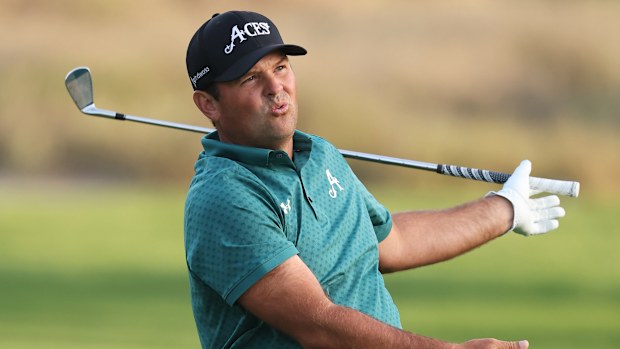
Patrick Reed was one of the key players who moved to LIV Golf. Getty
Polarising figures like the 35-year-old Reed often elicit strong opinions—he’s adored by some and detested by others. His past interactions with fans, rivals, the media, and even officials are well-documented, reflecting a tumultuous career path.
With a controversial reputation stemming from his college days, Reed has faced serious allegations of cheating, particularly in 2019 and 2021, where he was accused of unsporting conduct regarding his lie in sand traps. Some commentators have alleged they saw him cheat multiple times.
A self-described “lone wolf”, Reed has few friends on tour and is distanced from his family, preferring to tread his own path, which has garnered him a dedicated fanbase.
Koepka, likewise, has shown a brash side, often appearing curt with journalists and suggesting that golf was nothing more than a job for him.
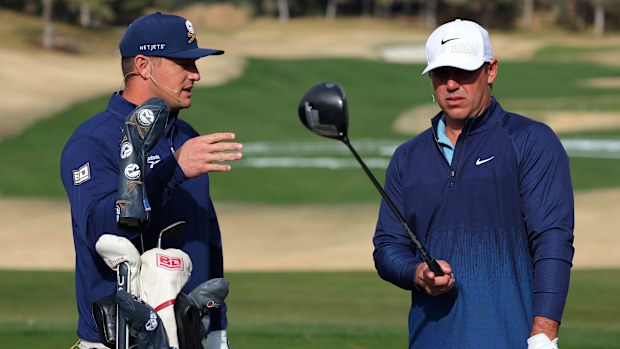
Bryson DeChambeau and Brooks Koepka. Getty Images for The Showdown
In a memorable 2019 chat on the Pardon My Take podcast, he went on record saying golf was “boring” and expressed regret for not pursuing a career in baseball.
“Golf is kind of boring, not much action. I come from a baseball family, and it’s in my blood,” he stated.
“If I could do it all again, I’d choose baseball—100 per cent, no doubt.”
In theory, their contentious personas should make them valuable assets for the PGA Tour, yet historically, the organisation has shied away from embracing negativity as a means to sell tickets or attract viewership.
But with a new leader at the PGA Tour’s helm, there may be potential for change.
More secure. More mundane.
In attracting talents like Reed, Koepka, Bryson DeChambeau, Phil Mickelson, and more, LIV Golf also secured the few players willing to express their opinions candidly and take risks.
They were also exceptionally skilled golfers, making them particularly appealing to a tour determined to revolutionise the sport.
While it’s yet to be seen whether LIV succeeded in that mission, it undeniably rendered the PGA Tour more sanitized, more secure, and frankly, duller.
Sure, the PGA Tour still boasts names like Rory McIlroy, Scottie Scheffler, and Jordan Spieth, offering depth unmatched by LIV, but it lacks the compelling rivalries that engage fans.
The excitement of rivalry was notably palpable during the 2024 US Open at Pinehurst, when Rory and Bryson clashed on the final day, leading to Bryson’s victory after a dramatic finish by Rory.
They further exhilarated fans at the Masters last year, where McIlroy finally achieved his long-awaited green jacket and a career grand slam.
However, these rivalries largely stemmed from enthusiastic fanfare and media narratives, without support from the tour itself.
Sport, irrespective of the discipline, thrives on the existence of villains. The lacklustre product of the PGA Tour reinforces the notion that villains often outweigh heroes in appeal.
In Australia, various codes such as rugby league and AFL actively promote rivalries during matchups—think Roosters versus Rabbitohs or Collingwood against Essendon. Even Supercars attempted to weave narratives around contentious finishes after last year’s title battle.
The ‘real damage’ caused by LIV
Jay Monahan has been the PGA Tour commissioner since 2017, but he’s currently in a transitional phase, passing the reins to new CEO Brian Rolapp.
Rolapp brings with him two decades of experience from the NFL, where he served as the league’s chief media and business officer.
If there’s a sport well-versed in capitalising on rivalry, it’s the NFL.
Eamon Lynch, a respected authority in golf journalism, noted that the way the PGA Tour markets Reed upon his comeback next season could set the tone for Rolapp’s administration.
“He’s a crucial test case for Brian Rolapp and his willingness to shift the culture of marketing within the PGA,” he remarked.
“Reed wasn’t a complex figure to reintegrate. He resigned his membership before joining LIV, thus adhering to all regulations.
“He opted out of the antitrust litigation—the tour had many lawsuits against him, but he didn’t join the antitrust case against the PGA, which influenced his standing in the locker room.”
Though he may have few close ‘friends’ in the locker room, he likely has earned a degree of respect from his peers.
“We all understand what sports fandom entails. It’s not just about wanting your team to win; there’s typically another team you want to see lose,” Lynch added.
“Similarly, it’s not merely about cheering for your favourite player; there’s inevitably someone you hope stumbles. This is an aspect that the PGA Tour has historically overlooked.
“Patrick Reed excels in this area—he embraces being polarising. There’s no middle ground with him. Many want to see him win the Masters, while others wouldn’t mind if he crumbled on the final hole and lost.”
“This is the essence of fandom, and the tour has yet to capitalise on it.
“They consistently project this image of players as good-hearted, charitable souls, but that’s often a façade. It’s an overly democratic approach to asset marketing.”
“If the tour is prepared to embrace the villains, that is where LIV has inflicted real damage. It has removed many of the polarising figures from the landscape.”
The surge in popularity for Formula 1 can be largely attributed to the success of the Drive to Survive documentary series on Netflix. Tennis has attempted to replicate this with Break Point, and golf has followed suit with Full Swing.
While golf has experienced a uptick in popularity, primarily due to the pandemic in 2020 when it was one of the few sports people could participate in, this trend has not translated into greater viewership.
Where Drive to Survive was free to dive into the rivalry between Lewis Hamilton and Max Verstappen, Full Swing could not similarly explore the dynamics between McIlroy and DeChambeau or others.
The return of Reed and Koepka to the sport presents the PGA Tour with a timely opportunity to completely revamp its marketing approach.
With golf’s inherent drama, if Rolapp plays his cards right and allows these organic rivalries to thrive on camera, the sport could attract an entirely new fanbase—pun intended.
Compiled by SportArena.au.
Fanpage: SportArena.au.
LiveScore – Live Sports Results & Odds.
