


Srna also conveys his insights on Arda Turan’s promising journey as a manager, the hidden reasons behind Croatia’s continual production of elite football talents, and why, despite having family in London and a travel time of up to 20 hours, he wouldn’t choose any other path.
After dedicating so much to Shakhtar as both a player and captain, how challenging was it to adapt to the sporting director role?
“Making that transition wasn’t overly difficult for me, as I simply continued my work at the club. To me, it’s more than just a club; it’s my football family. Naturally, there are times when I miss the thrill of being on the pitch and the energy from the fans, but it’s crucial to recognise when it’s time to step back, and I believe I chose the right moment. After retiring, I served as an assistant coach under Luis Castro, and a year later, I assumed the role of sporting director. I navigated the essential steps and I’m still learning as I go. However, I must point out that I took on the sporting director responsibilities during a time of war, and that’s definitely not easy. At times, you find yourself playing various roles—father, mother, brother, sister, uncle, and so forth. During such tumultuous times, keeping your focus on the job can be quite challenging.”
Did you find it tough to recruit players and persuade them to join Shakhtar?
“Initially, yes, it was a struggle. We brought in Castilho from Venezuela and Gio (Giorgi Gocholeishvili) from Georgia. Initially, we didn’t target Brazilian players as it was a difficult period. But progressively, as we adjusted to the war’s reality, we began signing Brazilians again: Pedrinho, Kevin, Marlon, Alisson, Isaque, and others. In the meantime, we also transferred a significant number of players.”
Is the pursuit of trophies and European competitiveness still the primary goal for Shakhtar?
“Even with the departure of 14 players, we participated in the Champions League and performed admirably. We managed to draw with Real Madrid in the dying moments and beat RB Leipzig, while under (Marino) Pusic, we also overcame Barcelona. We represent Ukrainian football on the European stage, and that holds immense significance for us.”
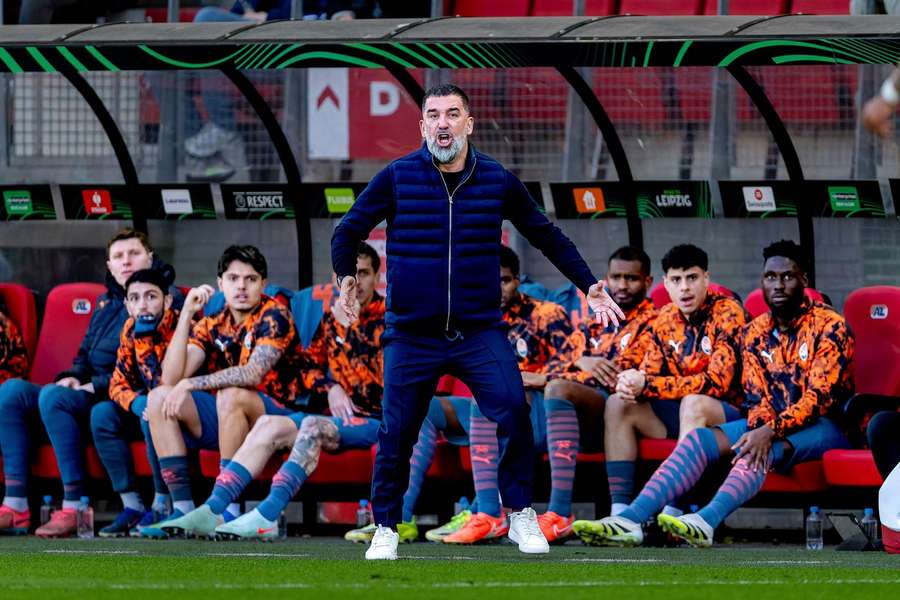
What changes occurred with Arda Turan’s arrival, and was it challenging to bring him in as head coach?
“I was familiar with Arda Turan from my playing days, though we didn’t share a personal connection. Like with players, we maintain a list of prospective coaches, seeking out young, motivated, ambitious talents. It’s often tricky to recruit an already established coach for Shakhtar. If you review our coaching history, you’ll see that (Paulo) Fonseca arrived with limited experience, (Roberto) De Zerbi had some, and both Pusic and (Igor) Jovicevic had experience, yet were still developing. All of them flourished with us, and I believe Arda will follow suit.”
“We began following his progress in the Turkish top league, and he did an outstanding job, winning promotion from the second division and coming close to securing a spot in Europe—an incredible achievement. We’re unafraid to work with young, ambitious coaches.”
What impact did he have in the dressing room?
“First and foremost, he accepted the position promptly. In wartime, that’s a significant commitment. The same was true for Jovicevic and Pusic, who both accepted immediately. They recognised the situation—yes, there’s a war, but they also understood the type of club they were stepping into. Arda responded without hesitation. We engaged in profound discussions about football and held two meetings before officially signing. Our CEO Sergey and I flew to Istanbul and finalised the deal in a single day. Afterward, he was in regular contact with me about the players—checking in on their whereabouts and how they were bonding. He was eager to get started. Even though he’s young, he possesses the qualities necessary for a promising coaching career.”
images/NurPhoto / Shutterstock Editorial / Profimedia
You’ve collaborated with numerous top coaches. Where do you envision Arda Turan in the coming years? Is he capable of reaching one of the top five leagues?
“Every coach who has emerged from Shakhtar has moved up the ranks. Luiz Castro went to Botafogo, Pusic is currently with Al Jazira enjoying considerable success, Jovicevic moved to Qatar, and then onto Arabia, finally landing at Ludogorets. De Zerbi took the leap to Brighton, while Fonseca made his mark at Roma. We develop not just players, but coaches as well.”
“With Arda, I have no doubt he is destined for an exceptional future. Yet first and foremost, we have a lot to accomplish together at Shakhtar, and we will tackle each challenge step by step.”
Reflecting on the 2009 UEFA Cup final, you were awarded ‘Man of the Match’. How do you recall that moment?
“Claiming a European trophy with Shakhtar was monumental… I arrived in 2003, and we achieved glory in 2009. It was an unbelievable feat for Ukrainian football and the entire nation. Afterwards, we constructed a stellar team at the Donbas Arena. However, due to Russia’s aggression, we lost it all beginning in 2014—our stadium, training facilities, home, and fans.
“Yet we endure, largely thanks to our president, Rinat Akhmetov. To him, football is not merely a business—it’s love, passion, and excitement. This year marks 30 years since he took over as the president of Shakhtar. There are very few like him in the football world; he is truly one of a kind.”
Let’s discuss the Brazilian players—how did they first join Shakhtar, and do you have a specific scouting strategy in Brazil?
“The groundwork for that commenced in 2003 and 2004, starting with Brandao, followed by Matusalem from Brescia. We quickly realised the potential we had with Brazilian players. The strategy was always straightforward: a solid Ukrainian and European defensive base, a dynamic midfield, and Brazilian creativity in attack. We’ve maintained that model all the way to the present.”
“All of our Brazilian talents have progressed to elite clubs: Fernandinho, Fred, Willian, Douglas Costa. Some are still competing at the highest level.”
Did you encounter challenges getting them to adjust to Ukrainian and European football?
“It’s not a walk in the park for them to come to Shakhtar, but they’re aware of the club’s legacy. I always advise them to connect with (Alex) Teixeira, Fernandinho, Willian, or our former players—they will provide the best insights. They’ll tell you to ‘take the plunge.’ Shakhtar acts as a bridge between Brazil and the top European clubs, much like Benfica, Ajax, and Porto. Unfortunately, we now lack the luxury of time. Previously, we could afford for players like Willian to have nearly a year to adapt; Fernandinho took eight months.”
“Currently, we’re acquiring players as young as 18 and integrating them directly into the squad. For example, Isaque, at 18, has already netted five or six goals. On one hand, it’s a gamble, but given our circumstances—the war, limited finances, and time constraints—we have no alternative.”
Igor Kupljenik/SPP / Shutterstock Editorial / Profimedia
How did you navigate Georgiy Sudakov’s transfer to Benfica?
“The process was smooth due to our strong connection with Benfica. They acquired both (Anatolii) Trubin and Sudakov; they expressed interest in Kevin too, while we secured Pedrinho from them. We have a very good relationship with their former president and also with Rui Costa now. However, they needed to recognise that they had to pay a fair price for Shakhtar’s star player, number 10.”
Were any clubs from the Premier League looking to sign him?
“Yes, we had strong interests from both Italian and English clubs as well. Sudakov is a tremendous talent.”
Could Artem Bondarenko potentially follow a similar trajectory?
“That’s possible. We’re currently navigating a tough phase—lots of travel and plenty of injuries. But we have a robust squad in midfield, and right now we’re not feeling the impact of those absences. If you look at this season across Europe, it’s reportedly one of the most injury-ridden years in the past 20 years. And consider that we’re travelling for 15 to 16 hours just for our home games. That has a physical and mental impact. Transitioning from a stadium that hosts 36,000 fans to one with just 4,000 or 5,000 is a significant mental hurdle. But we’re working on building that resilience.”
In hindsight, what are your thoughts on Mykhailo Mudryk’s transfer to Chelsea?
“Many doubt he was worth the price tag. That’s simply not accurate. Why would Chelsea invest that much in him? Why were Arsenal eager for his signing? Why did the entire of Europe have their eyes on Mudryk? The challenge he faced is that he joined Chelsea during one of their most turbulent periods in the last 25 years.
“When someone comes with a €70 million price tag, the expectations are sky high for instant results, but football doesn’t operate that way. There are many cases to illustrate this: Isak at Newcastle, Grealish—I could provide numerous examples. He’s still young. Prior to Chelsea, he’d only played about 10 or 12 Champions League matches.”
What enables Croatia to consistently produce exceptional talent? Is there a secret?
“We possess something… I can’t pinpoint what it is, but we have it. With a population of only 3.5 million, we excel in a multitude of sports. People frequently ask both me and (Ivan) Rakitic this same question. There isn’t a hidden formula. We’re hungry. We come from humble beginnings. We lack a national training centre or top-tier facilities, but we have character and determination.”
Do you see any parallels between Croatian football and that of Ukraine?
“There are definite similarities. When I played for Hajduk Split, I did so for practically nothing. I had a salary, but my goal was merely to play for Hajduk; money didn’t matter to me. Nowadays, players in Croatia earn substantial sums, often more than what they might receive in Europe at their current stage. To me, that speaks volumes. Croatian clubs must rely on their academies, similar to Porto’s model. Naturally, foreign talent is essential, but the initial emphasis should be on nurturing Croatian talent.”
What has been the most challenging negotiation of your career as sporting director thus far?
“Most contractual matters fall under the purview of our CEO Sergey. My role leans more towards understanding the player on a personal level. I strive to gauge the player’s character before finalising any agreement. I speak to the player directly, sometimes communicating with parents or agents. I conduct an in-depth analysis to mitigate risks involved. Still, mistakes can happen.
“Sometimes a player struggles to adapt mentally or emotionally to a new environment. That’s football and, indeed, life. People might perceive Shakhtar as a major club because we spend €50 or €60 million, but we also sell players for €140 million. We recruit 18-year-olds and guide their development. That’s our operational philosophy.”
How do you view the role of agents in modern professional football?
“To be frank, I have a negative impression of most agents. There are a few I hold in high regard, and I candidly inform them: ‘You advocate for your own interests, not for the player’s’. That’s not the right approach. They should prioritise the players. Today, football has turned into a pure business venture; agents sometimes demand more in commission than what the player earns in salary. That’s no secret. I disapprove of such a relationship. From my experience, when an agent exerts too much pressure and constantly shifts figures, the transfer often ends poorly.”
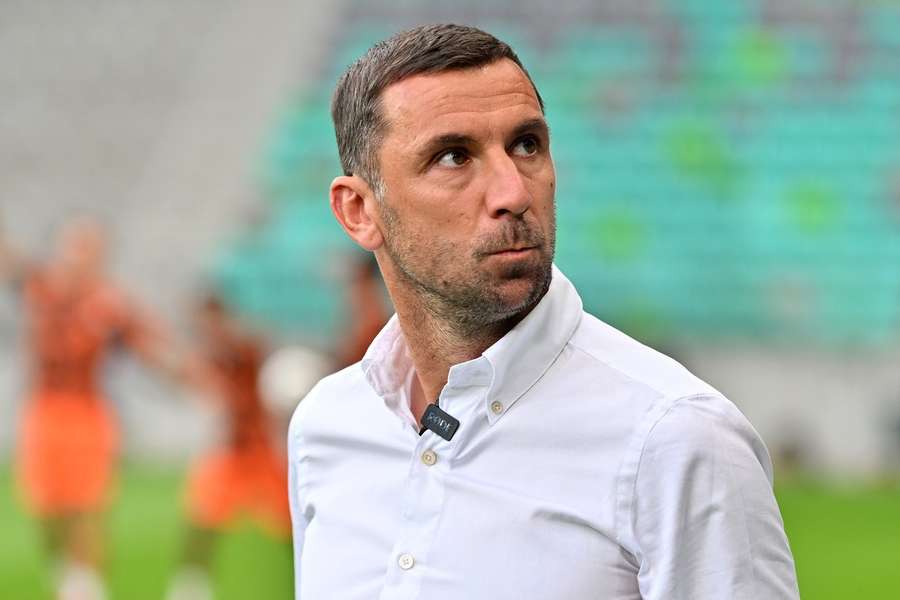
Finally, where do you see Darijo Srna in five or ten years’ time?
“If you were to ask my wife and children, they’d likely say at home by the beach. But my wife has known since day one that I can’t live without football. Currently, I’m here and quite content. My family has been residing in London for six years, and whenever I have a free three days, I make the trip to see them. We always make it a point to be together when travel and negotiations allow.
“Their support is immeasurable, especially in these times when the trip from London can stretch from 17 to 20 hours, depending on border conditions. It’s not what it used to be, back when there were three daily flights, allowing me to reach Heathrow in under three hours. Nevertheless, they grasp what this club means to me. I will stand by this club and Ukraine, no matter what it takes.”
Compiled by SportArena.au
Fanpage: SportArena.au.
LiveScore – Live Sports Results & Odds.
