


Former NRL player Zac Lomax is set to make his Super Rugby Pacific debut this weekend, facing one of the toughest challenges in the competition.
Playing against the Fijian Drua at their home ground in Lautoka is no easy feat for visiting teams. Since their inception, the Drua have developed a formidable reputation on home turf, amassing an impressive record since 2022, making them a ‘nightmare in paradise’ for opponents.
Here’s a look at why Lomax and his Western Force teammates are in for a demanding test, just 45 minutes north of Nadi.

Zac Lomax warming up for the round eight Super Rugby match. Getty
THE FIJIAN FANS
Throughout the Fijian islands, Drua flags proudly wave in villages, showcasing a supporter base that’s electrifying on match day.
“Churchill Park is fantastic as it’s situated right on the main street in Lautoka. Everyone dons Drua gear and arrives early,” remarks Sam Wykes, a former lock for the Force and a prominent commentator in Pasifika sports.
“The roar around kickoff is indescribable. There have been occasions when the crowd was so raucous that our audio team had to reduce the volume on the crowd effects microphones to a mere 1 out of 10 and it was still overwhelming.”
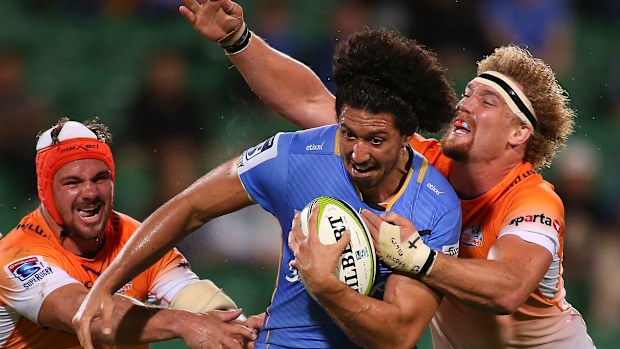
Sam Wykes in action for the Force against the Cheetahs. Getty
According to Wykes’ co-commentator Greg Clark, who has commentated on over 200 Test matches and has a wealth of experience with Drua games, the atmosphere can be deafening.
“When the crowd hits 10,000, it sounds like 30,000,” Clark states. “They’re regarded as the best rugby fans globally, and former coach Mick Byrne once referred to them as the 16th man on the field.”
He adds, “Anything can happen in the stadiums of Ba, Suva, and Lautoka. I recall a moment when a fan was dancing atop the temporary stands and then mysteriously vanished.”

Mick Byrne of Fijian Drua at ANZ Stadium. Getty
“He ended up falling through a gap and dropped down 20 feet. Thankfully, he got up unhurt and continued dancing like nothing happened,” he recalls.
Andrew Kellaway, outside back for both the Waratahs and Wallabies, has over ten years of Super Rugby experience and notes that the local fans have a distinct flair.
“The Drua supporters are remarkable in their unwavering enthusiasm. Just a hint of brilliance can send them into a frenzy, turning the momentum of the match,” Kellaway explains.
THE CONDITIONS
The heat and humidity can be unbearable. For instance, during the Queensland Reds’ visit this year, the playing temperature exceeded 30 degrees, with humidity levels soaring to 90 percent.
It’s common for rain to break out mid-game, leading to damp and muddy conditions that make footing precarious.
“Imagine playing touch rugby in a sauna while competing against 15 elite athletes intent on taking you down,” Kellaway describes, drawing parallels to his experience as a 49-Test Wallabies player.
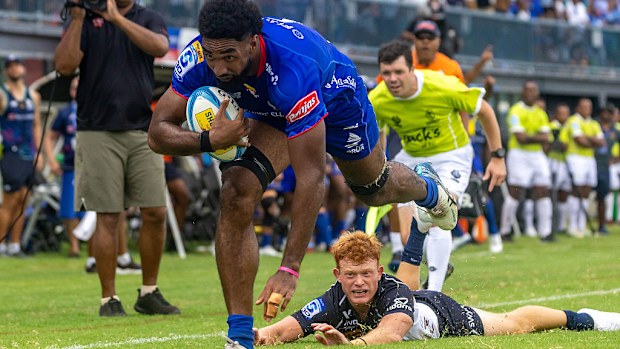
Etonia Waqa of the Fijian Drua scoring a try during the round five Super Rugby match. Getty
“The effort it takes is immense, and the humidity takes a toll on your lungs. It’s like the heat drains your energy rapidly, causing players to lose between 3-6 kg during a match,” he elaborates.
Wykes chimes in, “It’s akin to opening the door to a steam room, with all that heat hitting you at once.” He has observed the astonished reactions of visiting teams after they step off the bus, often exclaiming, “How hot is it?”

Drua players celebrating a try. Getty
Last season, the Brumbies’ coach, Stephen Larkham, visited in long pants and a zip-up top, which sparked questions about whether he was setting a psychological tone. He simply winked when asked. His team went on to win, indicating that perhaps there was some merit in his choice.
“Jamie Joseph, my former coach at the Sunwolves, always advised that ‘the heat should be embraced; make it your ally.’ When teams arrive in Lautoka in light clothing, it often leads to defeat,” adds Wykes.
Clark, author of The Rise of the Drua, notes the difficulty that some players have with breathing in the humid conditions.
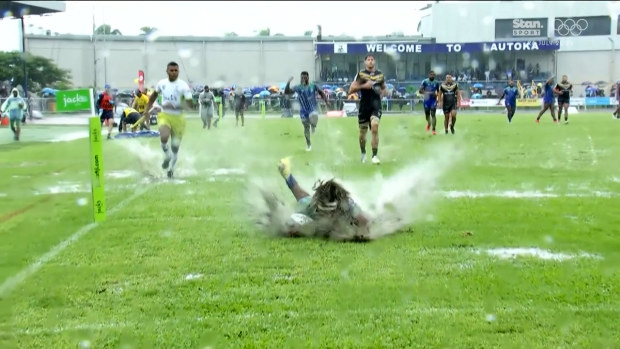
Selestino Ravutaumada scores for the Drua. Stan
“Some players compare the experience to playing at high altitude in South Africa. There’s no relief from the stifling humidity if rain clouds roll in,” he adds.
Additionally, it’s not just the climate that catches visiting teams off guard.
“I remember one of the Western Force players approached me during halftime last year, exclaiming, ‘Mate, there are frogs on the field!'” Wykes laughs.
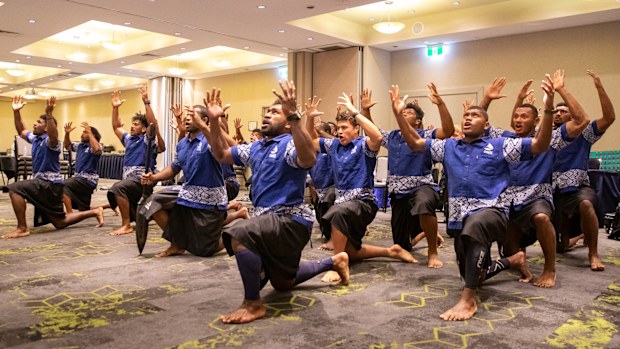
The Fijian Drua practice their new war challenge, Na Bole. Fijian Drua
THE NA BOLE
Exclusive to home matches and special occasions, the Drua present a cultural challenge before kick-off, known as Na Bole, which echoes sentiments of fighting fiercely and dismantling defences while embodying principles of endurance, honesty, and discipline. It translates loosely to, ‘We will battle tirelessly. We will conquer your defences. We are relentless. Go the Drua.’
This intense display elevates the atmosphere exponentially.
Kellaway, who has faced the All Blacks’ haka on multiple occasions, describes it as stirring.
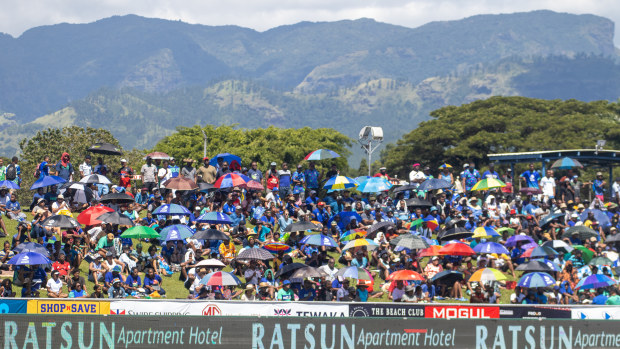
Fijian Drua fans at Churchill Park. Getty
“While both challenges are intense, witnessing a Fijian man built like a tank brandishing a spear and shouting at you is particularly daunting,” Kellaway adds.
Wykes believes the Na Bole provides an immense advantage to the Drua.
“It undoubtedly gives them a lift. Look at someone like Frank Lomani; you can see the passion in his eyes when performing it,” he observes.
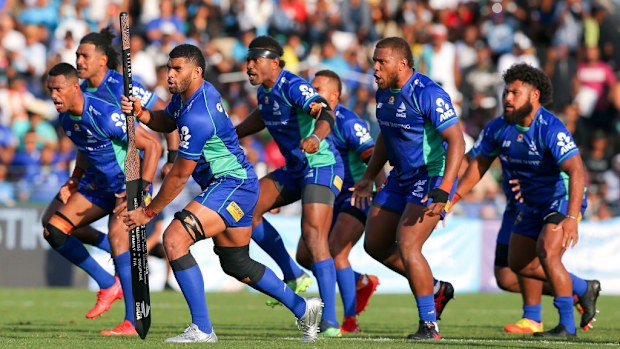
Meli Derenalagi of Fijian Drua leading the ‘Na Bole’ performance. Getty
THE NATION IS WATCHING
It’s a well-known adage that when the Fijian sevens team plays in major tournaments on the HSBC World Series, the entire nation tunes in.
Rumours even circulate that a Fijian Prime Minister once interrupted a broadcast director mid-game, insisting the camera focus on the Fijian team at halftime. That same fervour extends to the Drua.
“The audience numbers are substantial, mate,” confirms Wykes. “Everyone tunes in from villages across all the islands in Fiji. The kick-off times are even adjusted to coincide with local bus schedules, allowing fans to travel to and from the stadium conveniently. The love for the Drua is immense.”
Clark, a veteran of the sevens circuit, understands the depth of passion the Fijians have for rugby.
“They have a sharp understanding of the game and genuinely appreciate the entertainment it brings, particularly when teams like the Drua and the Flying Fijians exhibit their signature flair,” he explains.
THE NUMBERS
Stan Sport’s stats expert and rugby enthusiast Kate Lorimer has examined the data, revealing that the odds are not in favour of visiting teams, as the Drua boast a 66 per cent win rate at home.
Moreover, the toll that this trip takes often affects the teams’ performance in subsequent rounds.
Neither the Brumbies, Waratahs, nor Force have secured a victory in their following match after facing the Drua. Only the Chiefs and Highlanders have managed to maintain a perfect record post-Drua encounters. What can Lomax expect in this high-pressure environment?
“The Drua will ensure he knows they’re defending their turf, and his reputation means little in Fiji. The fans are passionate about their sport and will be well aware of his talent. Despite some bumps and bruises, I believe he will relish the experience,” Clark concludes.
“Zac has played in State of Origin, but this is a different ball game altogether. He’ll need to lather up with sunscreen while on the bench, and once he’s on the field, it’s going to be a bruising affair. Expect the unexpected,” jokes Wykes.
Catch Lomax and the Force take on the Drua, live and exclusive on Stan Sport at 2 pm AEST this Saturday.
Compiled by SportArena.au.
Fanpage: SportArena.au.
LiveScore – Live Sports Results & Odds.
