


Olivia Lewis, defender for the Melbourne Mavericks, has revealed her plans to transition to a rival code in pursuit of a fresh sporting aspiration.
At the Mavericks’ end-of-season awards evening on Thursday, Lewis confirmed her departure from the club to embark on a career in AFLW.
With no contract in place for the 2026 season, the 26-year-old acknowledged that this was the “ideal moment” for her to make this leap.
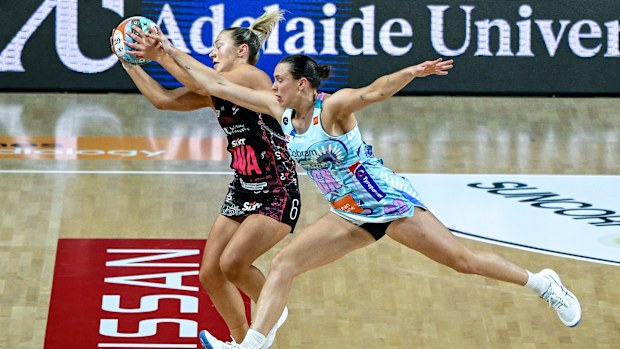
Olivia Lewis in action as she defends against Georgie Horjus of the Adelaide Thunderbirds. Mark Brake via Getty Images
“I’m heading to play footy. I know, it’s quite the surprise,” remarked the Mavericks’ defender of the year during a chat with SEN on Friday.
“I’m thrilled to announce that I’m pursuing a career in footy and playing in the AFLW. This has been a long-held dream of mine.
“It feels right for me to go after this new passion. Leaving the Mavs is the hardest part; while netball has its own charm, the Mavericks hold a special place in my heart.
“This represents an exciting new chapter for me.”
After an illustrious junior career, Lewis made her Super Netball debut with the West Coast Fever in 2019, enjoying three seasons with the franchise before moving to the Melbourne Vixens for two years. She became an inaugural Maverick in 2024, competing in 28 matches over the last two seasons.

Olivia Lewis has made the decision to retire from netball to embark on a career in AFLW. @melbournemavericks via Instagram
“This is a decision I’ve been contemplating for some time and something I’ve aspired to pursue for ages. Now feels like the right moment for me to chase this dream,” Lewis reflected.
“I’m incredibly satisfied with my career in netball, and I’m thankful for all that it has given me, so overall, I’m just very eager about what lies ahead.”
Although Lewis won’t compete in the upcoming AFLW season, the Western Australian native hopes for selection by a Melbourne club during the rookie draft later this year.
Mavericks CEO Richard Simkiss expressed his unwavering support for Lewis’ transition, indicating she has the backing of the entire group. However, this situation may raise concerns for the Super Netball league and Netball Australia.
The growing prevalence of female sporting codes—previously seldom played by women at the grassroots level, including AFL, cricket, and rugby league—is creating competitive opportunities that rival netball’s traditional pathways.
Lewis joins the ranks of numerous former national team players who have successfully made the change between codes.
Retired Diamonds legends Sharni Norder (née Layton) and Ashleigh Brazill both turned to AFLW careers, with Brazill set to don her boots for the Fremantle Dockers later this month.
NSW Swifts midcourter Verity Simmons also signed with the West Coast Eagles on a rookie contract for the 2024 AFLW season but was later delisted, after which she announced her return to the Super Netball.
This emerging trend of elite netball players switching codes for AFLW careers signals the precarious position netball in Australia currently occupies, emphasising the urgent need for the sport to adapt in order to remain a competitive force.
With choices for women and girls expanding significantly, the landscape of women’s sports in Australia has witnessed substantial transformation.
As leagues such as the AFLW and NRLW have gained popularity, they are now able to offer elite pathways and media coverage that were once nearly exclusive to netball.
This shift has also seen female grassroots sports participants, who might have traditionally chosen netball, now consider a variety of appealing alternatives.

Teammates Ash Brazill and Sharni Norder from the Collingwood Magpies celebrate a victory in an AFLW finals series in 2021. Kelly Defina/AFL Photos/via Getty Images
In addition to this, a new challenge is emerging for Australian netball’s elite pathway from across the Tasman.
Recently, Netball New Zealand revised the eligibility criteria for the Silver Ferns, allowing greater flexibility for athletes wishing to compete overseas.
The updated rules now enable players abroad to be considered for national selection via a formal exemption process, replacing the former requirement that mandated players must have achieved 100 international Test caps to be eligible for the Silver Ferns while competing professionally overseas.
This change allowed star goaler Grace Nweke to step away from the Black Dress for a year to sign with the Swifts for 2025.
With an influx of Kiwi players expected to enter Super Netball, there’s growing debate regarding the implications for Australian pathway athletes pursuing opportunities in the domestic league.

Grace Nweke, formerly of the Silver Ferns, made a strategic decision to join the Swifts this year. Grace Nweke
Diamonds legend Kim Green believes that the influx of Kiwi players will raise the stakes for homegrown talent, yet this is a vital aspect in maintaining Super Netball’s status as the top netball league globally.
“Ultimately, this is a business. To attract the best players, you need the best talent in the league,” Green remarked on Fox Netball’s Pivot.
“When coaches are assembling their teams, winning is the priority, so naturally, they’ll seek out the best available talent.
“We have promising youngsters coming through, and the support is still visible.
“The introduction of the 11th player rule is beneficial in this regard.
They’ll fill positions… [but] I don’t anticipate New Zealand will allow an influx of players; however, a few will likely manage to cross over.”
The 11th player rule, set to debut in the 2024 season, allows an extra athlete—typically a training partner—to be included in a club’s squad of ten, creating additional opportunities for budding players to gain valuable matchday experience.
Australian netball superstar Bianca Chatfield echoed this sentiment, asserting that Super Netball should embrace more international players.
“It’s undeniably competitive to secure a spot on a list of 10,” she stated.
“We could see players like Kelly Jackson, and potentially Maddy Gordon or Kate Heffernan coming here to play in Super Netball,” she added.
“It’s exciting! Bring on the international talent as we showcase the world’s best competition.”
Chatfield further articulated that Super Netball shouldn’t be considered the sole path to Diamonds selection, advocating for greater status for the relatively new Super Netball Reserves competition.
The leading goal shooter and goal keeper positions for Australia’s elite players are under continuous pressure from international imports in the Super Netball league.
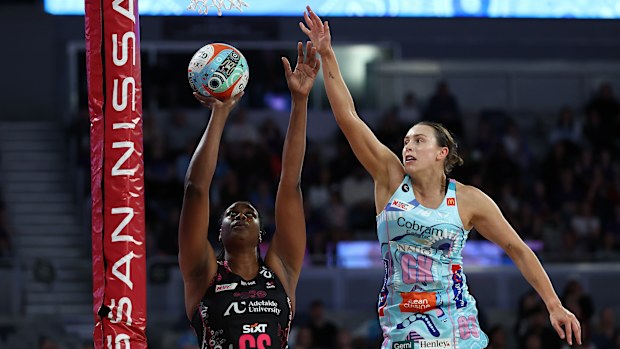
Romelda Aiken-George of the Thunderbirds is pressured as she shoots, with Olivia Lewis defending from the Mavericks. Graham Denholm via Getty Images
“We need to increase the visibility of the Super Netball Reserves,” Chatfield expressed.
“We’ve observed that Lucy Austin played a mere two games in Super Netball before being invited to be part of the Aussie squad, highlighting the importance of this opportunity.
“The Reserves must operate throughout the entire Super Netball season to enable emerging talent to showcase their performance, particularly for positions where spots may be limited.
“It’s crucial to recognise the vast potential among youngsters in the Australian scene, especially when competition for places in key positions remains intense.”
Donnell Wallam is the sole athlete selected who is currently competing overseas.
While netball is indeed evolving in Australia, it would be shortsighted to assume that the sport’s long-standing leadership in women’s athletics and its strong ties to female empowerment will suffice to deter top players from pursuing other codes.
Compiled by SportArena.au.
Fanpage: SportArena.au.
LiveScore – Live Sports Results & Odds.
