


The CEO of the NRL, Andrew Abdo, has opened up about the league’s ongoing negotiations to acquire a share in the English Super League. His comments come in response to concerns voiced by UK clubs that are apprehensive about the Australian league’s real intentions.
Discussions kicked off in Las Vegas back in March, focusing on the potential purchase of a 33 per cent stake in the Super League by the NRL.
If the deal goes through, the clubs involved would benefit from a more substantial central distribution of media and sponsorship revenues, contingent upon the NRL taking over management responsibilities.
Abdo strongly rejected any worries about the Super League becoming “subservient” to the significantly larger NRL.
“Our aim is to bolster rugby league in the UK and Europe as much as we can,” he stated in an interview with BBC Sport.
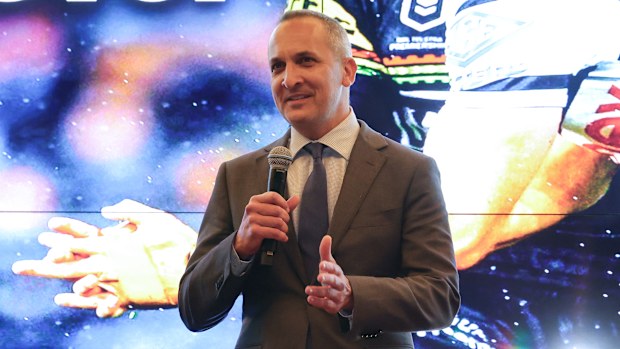
NRL CEO Andrew Abdo during the NRL Las Vegas media launch. Ethan Miller via Getty Images
“That’s the complete opposite of becoming a feeder program,” he added. “We’re undertaking this initiative to expand and entice players from various codes, ensuring robust investment in development pathways to cultivate even more elite talent in this competition, enabling it to flourish.”
Despite these reassurances, scepticism remains among some stakeholders.
Leeds Rhinos Chairman Paul Caddick has voiced his unease, stating firmly, “We have no plans to be absorbed.”
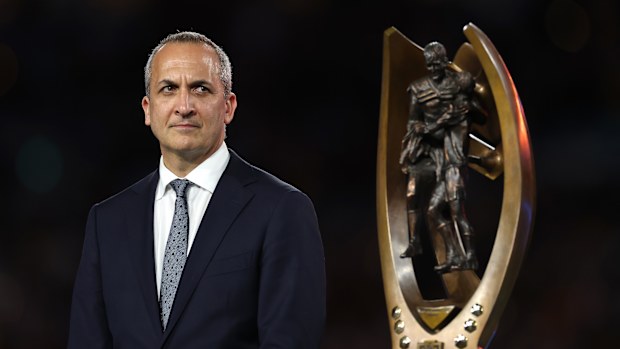
NRL CEO Andrew Abdo engaged in extensive discussions about the league’s future. Getty
“If Australia benefits at the expense of the English game, the divide will only widen, and we would end up being the inferior party, which I would never endorse,” Caddick stated. “It fundamentally raises the question of ‘why?’, ensuring it goes beyond merely extracting wealth from us or using us to support their growth.”
When confronted with these concerns, Abdo took a practical approach in his replies.
“I understand that without adequate information, it’s easy for people to assume the worst,” Abdo noted. “However, the notion that the Super League could transition into a feeder league for the NRL is completely misguided. We recognise the dynamics of competition, and we’re coming into this with both eagerness and humility.”
“We’re acutely aware of the challenges this market presents. A key part of our deliberation process involves listening closely out of respect for the complexities of this environment, both its challenges and its opportunities. Our goal is to determine how much potential growth exists from that foundational understanding.”
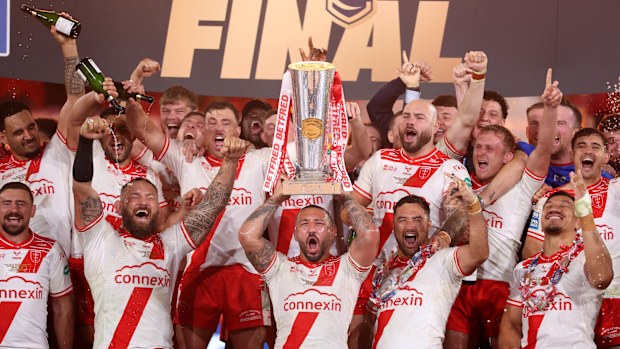
Hull KR celebrates lifting the Betfred Super League Grand Final trophy in 2025. Getty
When asked if this implies that Super League club owners would need to relinquish their existing decision-making authority, Abdo sought to reshape the narrative.
“You could frame it as a loss of control, or consider it as gaining clarity and autonomy in decision-making,” he explained.
“The capacity to implement a plan arises from governance structures that empower decision-makers to act in the best long-term interests of the game, rather than short-sightedly catering to various interests.”
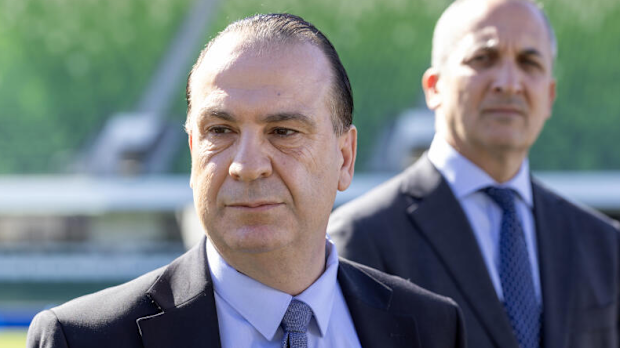
Peter V’landys, Chairman of the Australian Rugby League Commission. Paul Kane/Getty Images
“The primary motivation behind this move is our belief in the sport’s potential and our desire to globalise it. If the two leading competitions can unite and collaborate, it can significantly benefit and solidify rugby league as a whole.”
“For us to invest effectively, it is essential to have robust and transparent governance in place—this is one of the current challenges we are addressing.”
This call for investment arises amidst reports indicating that Super League club owners are collectively incurring losses of nearly AUD $37.6 million per year, despite an uptick in attendance and viewership.
Last year, ARLC Chairman Peter V’landys cautioned that the UK league was heading for disaster unless it found new revenue streams.
Comments from Rhodri Jones, head of RL Commercial—the body overseeing the sport’s commercial rights in the UK—described the discussions as “promising.”
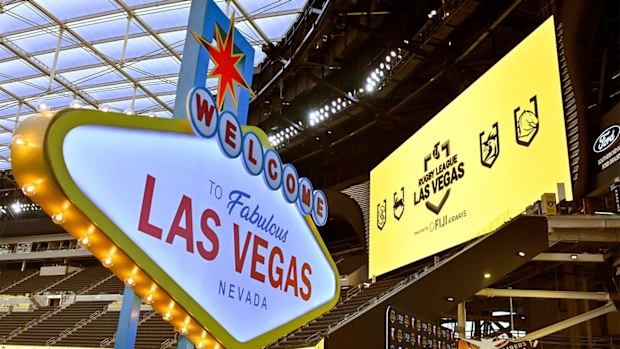
The NRL has expanded into Las Vegas. Getty
“The sport is receptive to investment,” Jones stated. “The NRL is a logical partner, being the frontrunner in the negotiations we’re engaged in with multiple parties.”
“Currently, we establish boundaries to ensure the UK game is represented. Our governance structure already encompasses independence.”
“I believe a feasible solution exists that enables the ARLC to feel a sense of control while, at the same time, maintaining oversight within the UK regarding the operations in this region.”
“This is not a takeover; it’s an investment that also represents a partnership. There’s certainly capital proposed, but equally, there are synergies between the two competitions within the same sport and know-how that the NRL can provide to the UK game.”
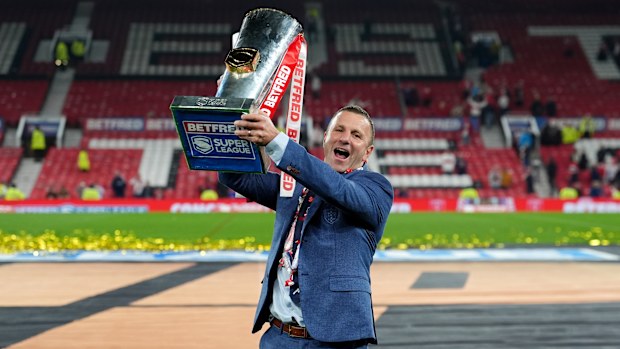
Hull KR head coach Willie Peters celebrates the Betfred Super League Grand Final victory at Old Trafford, Manchester. PA Images via Getty Images
“The focus is on the global reach of the sport and ensuring it can be showcased across as many regions as possible. We did discuss player pathways, but it wasn’t about siphoning top talent from England to Australia.”
Jones emphasised that any financial infusion must serve to enhance the broader rugby league ecosystem, not just inflate player salaries at the elite level.
“Our discussions revolved around how we can improve the pathway system in the UK and deliver superior outcomes,” he stated. “A critical part of the conversation was that such funding cannot merely flow through to clubs to boost player wages and inflate salaries. While clubs will benefit, the funds must also support the overall structure, including the women’s game, the wheelchair game, and grassroots level.”
Compiled by SportArena.au
Fanpage: SportArena.au.
LiveScore – Live Sports Results & Odds.
