Your arrival at Manchester City coincided with a period of significant transformation. Did it feel like a pivotal moment straight away, or more like a regular transfer?
“It was far from a typical transfer. When I joined the club, there was a different owner from Thailand who was keen to sell due to issues with the federation back home. There were about three or four potential buyers in the mix at that time.
“However, my primary goal was to get to England and play in the Premier League, so the ownership situation wasn’t a major factor for me. Just a week after I signed, the new owners from Abu Dhabi took the reins, and their first acquisition was Robinho for £40 million. Compared to today, that figure might not seem massive, but in 2008, bringing in a star from Real Madrid for that amount sent a very clear message.
“That was when people really understood that something monumental was on the horizon. It marked a genuine turning point for the club—looking back, I know I arrived at precisely the right moment.”
So there was a pre-existing connection between Real Madrid and Manchester City?
“Absolutely. What struck me was how quickly the new owners made their intentions clear. Typically, when a new ownership takes hold, it takes time to unveil their vision and make significant changes, but they wasted no time—this is our ambition, we want the best players in the world. Making such a substantial investment in a player from Real Madrid right from the start made a strong statement.”
After these changes, did you feel a sense of responsibility in helping to foster a new culture at the club?
“The entire team felt it. At that time, Mark Hughes was in charge, and when we met the new owner, he made their goals clear. He stated, ‘We have a clear ambition and vision for this club. We know winning won’t happen overnight—if we want trophies, we need to build the right team.’
“What impressed me about the owners was their understanding that winning in one or two years wasn’t feasible. They were in it for the long haul—a ten-year plan. Having great players is one thing, but you need individuals who are committed, who want to make history for the club. That takes time.
“New players joined, some outstanding, but others lacked the commitment and left after a year or two. It took about three or four years to cultivate the right mindset to genuinely challenge the likes of Manchester United, Chelsea, and Liverpool and to reach the level where we could confidently call ourselves a big club.”
I have to ask about Micah Richards. What was his reaction to your arrival, and what was he like in the changing room? Is he still the same character he was back then?
“He’s exactly the same—always joking, always cheerful, with a huge smile. A fantastic person and a true gem.
“At that point, he was actually playing more as a centre-back next to Richard Dunne than in his usual right-back position, while I took on the right-back role. It wasn’t until the next season, after the club signed Kolo Toure and Joleon Lescott, that Micah was shifted back to full-back, leading to us competing for the same spot. But it was always a healthy competition.
“We had a great bond and a deep respect for one another—we both just wanted to ensure we stayed in the starting eleven.”
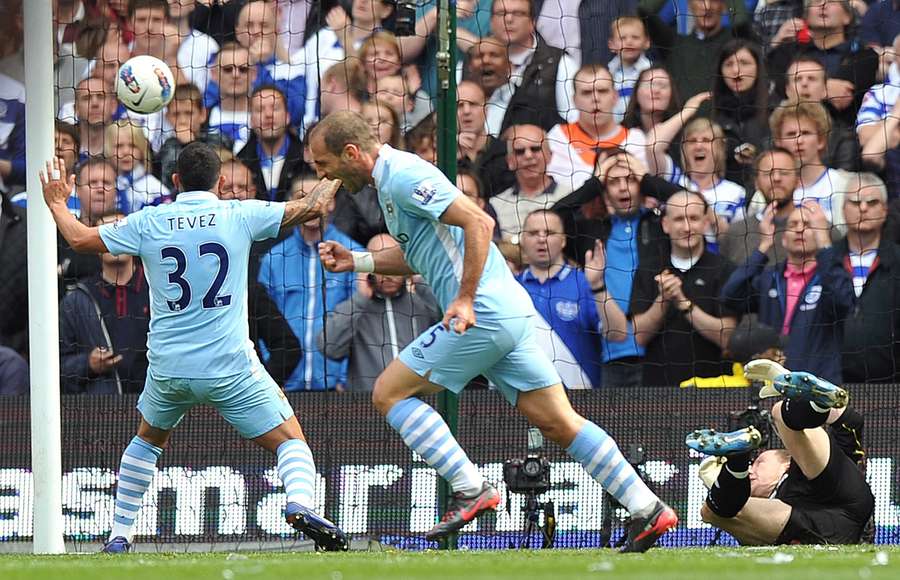
When you scored that goal against Queens Park Rangers, what was going through your mind? Did you believe the title was within reach at that stage?
“That match was a monumental moment for the club. We had won the FA Cup the previous year, which was massive, but clinching that first Premier League title was on another level altogether. It was the moment when other clubs began to see us differently; suddenly players thought, ‘If I had the chance, I’d love to join Man City.’
“For me personally, it was a very special occasion, even if my goal was just the first of the game and many remember Aguero’s instead.
“Before kick-off, we knew we were on the cusp of winning our first Premier League medal—a feat not many players can claim. And while QPR were battling relegation, we understood nothing would come easily. The sequence of events that afternoon—both Manchester clubs vying for the same title, the drama of the final moments—was simply astonishing. You could go years without witnessing anything like it.
“United had dominated English football for so long, and Ferguson would often refer to us as their noisy neighbours. To win the title in that manner was beyond our wildest dreams.”
How instrumental was Roberto Mancini in establishing the right mindset at the club?
“He was pivotal. Roberto arrived with substantial experience managing top players at Inter Milan, so he was adept at handling strong personalities and egos—an environment where everyone wants to contribute, and few tolerate sitting on the sidelines. Managing that dynamic is a skill in itself.
“He was a winner in every sense, and he had a distinct character. It took us a while to fully grasp his approach. After a loss, he would storm into the dressing room, absolutely enraged, and we needed to see that. He instilled in us that losing was not an option at this level—our only standard had to be winning week in, week out. That mindset laid the foundation for our mentality.
“He was a key figure in the club’s evolution during that time.”
You were named City’s Player of the Year in the 2012-13 season. What did that accolade mean to you?
“It meant an enormous amount. With the new owners coming in, I was acutely aware that the resources were available to sign the best players for every position. Who is the best right-back in the world? Let’s go get him. I realised that this was my chance. I had to earn my spot.
“When I first arrived at the club, I didn’t expect to win much, and after a year, I looked around at my teammates and thought about how fortunate I was. But I knew I had to work hard, secure my starting role, and create history with the club. Being named Player of the Year in such a talented squad was mind-blowing. It proved that if you truly believe in yourself and fully commit to your work, remarkable moments can materialise.
“It remains one of the highlights of my career.”
Now, let’s talk about Pep Guardiola’s arrival. What changed?
“Everything, in the most positive way imaginable. We had played some delightful football under Mancini and Pellegrini, and while we had secured trophies, Pep’s arrival signalled a desire to claim absolutely everything—not just to dominate English football but to win the Champions League.
“Moreover, having a manager like Pep attracts the finest players in the world. His extraordinary success at Barcelona and Bayern Munich brought with it the same ideas, philosophies, and relentless standards.
“I had the privilege of working under him for just one season before I left, and although we didn’t win anything that first year—the squad was in transition, several of us were in our thirties, and the club needed fresh legs and energy—you can see what has happened since.
“He has been at the club for over a decade now, surpassing his tenure anywhere else. He has won every possible trophy, shattered records for points and goals in the Premier League, and produced some of the most extraordinary football I’ve ever witnessed. For anyone who loves football, watching Manchester City in recent years has been an absolute privilege.”
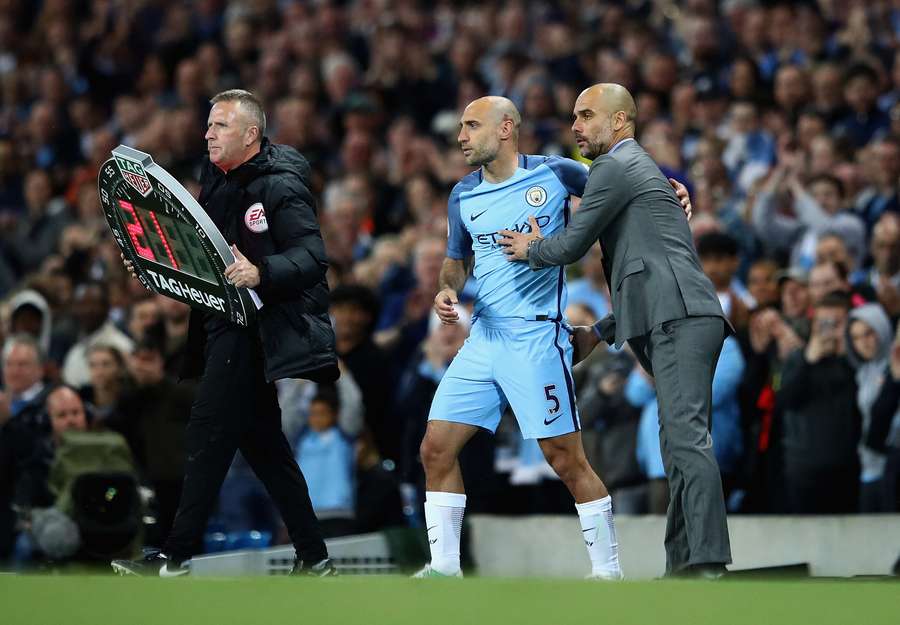
What is one aspect about Pep Guardiola that outsiders may not understand?
“He is utterly obsessed—in the most commendable way. While it’s widely known that he’s an exceptional coach with an impressive style of play, what truly stands out is how he motivates players. He arrives every morning already in his office, contemplating what can be improved, even when the team is performing brilliantly.
“For him, nothing is ever enough. He’s constantly asking: could this midfielder adjust his style? Could this full-back advance further? Could I utilise this player in a more progressive role? He sees possibilities before anyone else—and that’s what sets him apart.”
Given his obsession with football, do you envisage him managing a national team one day?
“I think that’s a real possibility. After City, I’m not sure he’ll choose another club in England, and it’s equally unlikely he’ll manage another Spanish club post-Barcelona. Germany could be a fit, and Italy is a possibility given his player history there. Ultimately, I believe that coaching a national team is the most likely next step.
“It’s a different pace—there are five international windows each year, roughly eight matches instead of sixty. It’s less physically demanding for a coach, focusing more on travelling, observing players live, building connections, and strategising within those concentrated periods of time. Two weeks of preparation for two matches followed by a chance to rest. Eventually, I think he’ll reach that point, and I can assure you every national federation worldwide would want him.”
Vincent Kompany was a true leader in the Manchester City dressing room. Now he’s experiencing significant success as a manager at Bayern Munich. Did you recognise those leadership qualities in him from the start?
“From the very first day. Vincent and I both arrived at City in 2008, and we spent a lot of time together at the hotel during those early weeks before we got settled into our own apartments. From the outset, it was clear—his immense personality, authority, and the fact that he could converse in three or four languages.
“On the pitch, he was a natural leader, and as I got to know him through training and shared conversations in the dressing room, his football intelligence and understanding of the game indicated that he was bound for a coaching career.
“His stint at Burnley probably raised a few eyebrows—getting promoted then relegated in the Premier League—but I always felt people were too hasty in their judgement. When you pair a talented coach with elite players, as he has now at Bayern Munich, you get to see his true capabilities. He also played for Hamburg, speaks German, and understands the culture well. It all makes perfect sense. I’m genuinely thrilled for him.”
Two final names—Carlos Tevez and Mario Balotelli. They are very different characters. How do they compare, and did you share a particular bond with Carlos given your common background?
“Carlos was an outstanding signing, especially moving from Manchester United—his image on that massive ‘Welcome to Manchester’ billboard in a blue shirt is something I can never forget.
“I actually knew Carlos from our time in the Argentina youth squads, so I was aware of his exceptional talent. He had an interesting style in training—never one to overly exert himself during the week, you’d let him go at his own pace. But come the weekend, he was always the one delivering the crucial victories. That was his unique ability.
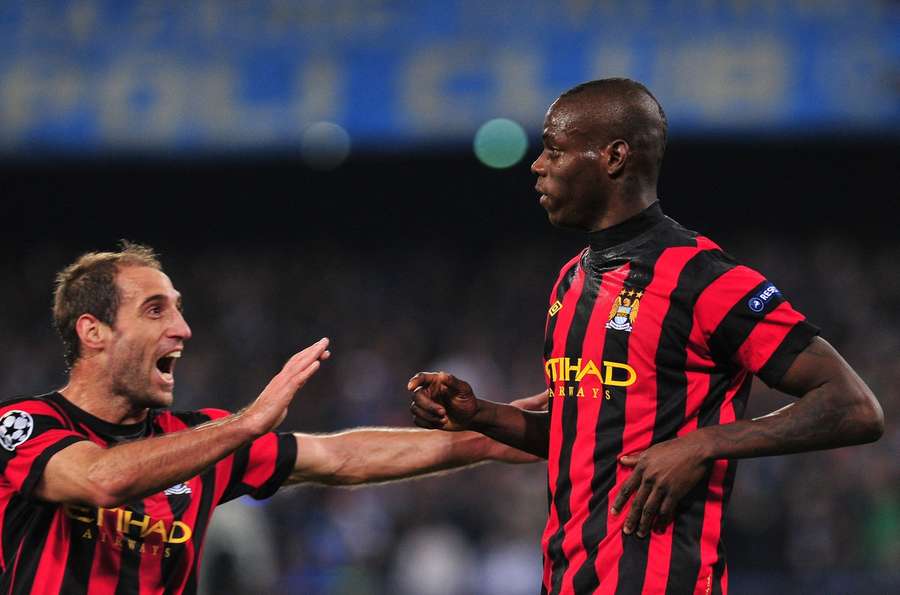
“Mario is a player I still chuckle about whenever he comes to mind. Mancini had worked with him back at Inter when he was quite young—only 19 or 20—and I think he genuinely believed that Mario could become a leading striker. The talent was unquestionable. He was fast, had a powerful shot, was technically proficient, and I never saw him fail a penalty. He was an extraordinary player.
“The disappointment is that he couldn’t fully grasp the professional side of being a footballer—the need for consistent training, resting appropriately, maintaining a healthy diet, and focusing solely on football. At his level, competing with Aguero, Dzeko, and Tevez, you had to be at your best every single day.
“And of course, there was always some drama off the field. Without fail, every morning at breakfast, there would be headlines featuring Mario. But with all that said, City fans adored him, and rightly so. That assist for Aguero against QPR and the Why Always Me? goal against United are moments etched into the club’s history.
“As a former teammate, I still hold a lot of affection for him. He was a brilliant character who perhaps just needed more time to mature. I hope people remember the footballer he was, because he was truly unique.”
After your time at City, you moved to West Ham. How do you remember that chapter?
“With great fondness. It was a completely different setting, of course—transitioning from a club where every season is expected to yield trophy challenges to one often fighting for survival in the league. But I was 33 at that point and looking for something fresh.
“West Ham has historically been a difficult place to visit—the atmosphere at the old Upton Park was unmatched. Relocating to London was also a wonderful change for my family. At that stage in your career, you start considering more than just the game—quality of life, what the city offers outside of football.
“I was there for three years, working under (Slaven) Bilic, David Moyes, and Manuel Pellegrini, who I already knew from my time at City. There were undeniably tough moments—times we were glancing nervously at the relegation zone—but equally, there were memorable experiences.
“The London Stadium holds 60,000 fans, and they filled it for each home match. East London is entirely West Ham, through and through. Walking around Canary Wharf, you’d see claret and blue everywhere. It was a fantastic experience, and I still hold a lot of affection for the club.”
“This season has proven quite challenging for them, but they’ve shown signs of good form recently. They’re only a point or two behind Nottingham Forest and Tottenham, who are also encountering difficulties. I sincerely hope they can stay up. I still have connections at the club and a deep fondness for West Ham.
“Their triumph in the Conference League was a historic achievement, and a club of that stature deserves to remain in the Premier League.”
Compiled by SportArena.au
Fanpage: SportArena.au.
LiveScore – Live Sports Results & Odds.