You joined Manchester City at a pivotal time in the club’s history. Did it immediately feel significant, or did it feel like a regular transfer?
“It was far from a typical transfer. When I signed, the club had a different owner from Thailand who was apparently considering selling due to issues with the federation back there. There were a few other parties eyeing the club for a potential purchase.
“That said, my primary goal was to move to England and play in the Premier League, so the ownership situation didn’t heavily influence my decision. However, about a week after I put pen to paper, new owners from Abu Dhabi took over, and their first signing was Robinho for £40 million. While that fee might not seem monumental now, at the time, bringing in a star from Real Madrid for such a sum sent a very clear message.
“That was the moment it hit home that something monumental was unfolding. It marked a genuine turning point for the club, and looking back, I came at just the right moment.”
Was there already a link between Real Madrid and Manchester City before this?
“Absolutely, and what stood out was the immediate decisiveness of the new owners. Usually, when you take over a club, it takes a while to implement your vision and make significant changes, but they acted swiftly — announcing their ambitions to recruit the world’s best players. The hefty fee for a Real Madrid star right from the start made a powerful statement.”
Following those changes, did you feel a sense of responsibility to foster a new culture at the club?
“The entire team felt that responsibility. At that time, Mark Hughes was our manager, and when we met the new owner, he was very clear in his message. He said, ‘We have a transparent ambition and a clear vision for this club. We understand that football doesn’t yield immediate success — if we want to win trophies, we need to construct the right team.’
“What impressed me was that the owners genuinely recognised that it wasn’t about winning something within a year or two. It was a long-term plan. You need not only great players but also those who genuinely want to commit and change the club’s history. That process takes time.
“New players joined — some were excellent, while others didn’t exhibit the commitment and left after a season or two. It took about three or four years to cultivate the right mentality to genuinely challenge teams like Manchester United, Chelsea, and Liverpool — to reach a point where we could proudly call ourselves a major club.”
I’m curious about Micah Richards. How did he react when you arrived, and what was he like in the dressing room? Is he still the same person now as he was back then?
“Exactly the same — always cheerful and full of laughter, with a big smile. A wonderful guy and a fantastic human being.
“At that point, he was playing more as a centre-back alongside Richard Dunne than as a right-back, while I took on the right-back role. It was the following year, after the club signed Kolo Toure and Joleon Lescott, that Micah was shifted back to full-back, and that’s when we started competing for the same spot. But the competition was always healthy.
“We had a fantastic relationship and a tremendous amount of respect for one another — we both simply wanted to secure our places in the starting XI.”
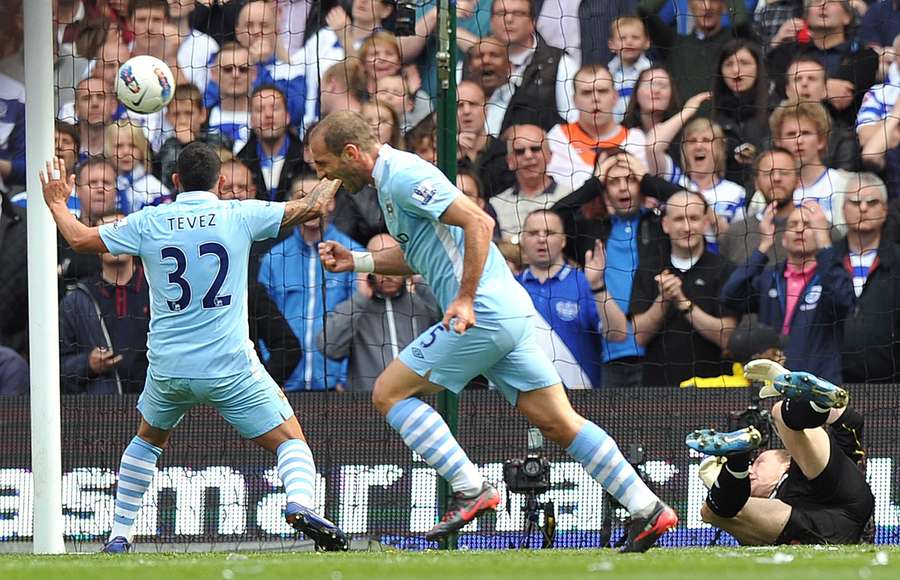
What was going through your mind when you scored that goal against Queens Park Rangers? Did you believe the title was within reach at that moment?
“That match was a monumental moment for the club. We had won the FA Cup the previous year, which was massive, but clinching our first Premier League title was something else entirely. It’s the point when other clubs and players begin to view you differently — when a player thinks, ‘If the opportunity arises, I’d love to play for Man City.’
“Personally, it was an unforgettable day, even if my goal was the first and many may forget it because everyone — rightly — remembers (Sergio) Aguero’s heroics.
“Before the match, we were aware that we had the chance to secure our first Premier League medal, something not many players can claim. Even though QPR was battling relegation, we knew it wouldn’t be straightforward. What transpired that afternoon — with both Manchester United and City vying for the same title and all that unfolded in those final moments — was genuinely incredible. You could go years without witnessing anything like it.
“United had dominated English football forever, with Ferguson famously dubbing us the noisy neighbours. Winning the title in that manner was beyond anything we could have imagined.”
How significant was Roberto Mancini in nurturing the right mindset at the club?
“He played a crucial role. With his background managing high-profile players at Inter Milan, he knew how to manage strong personalities and egos in a competitive environment where everyone wants to play and few accept being benched. That is a skill on its own.
“He was a natural winner and brought a unique character to the team. It took us a few months to fully grasp his expectations. When we lost a match, he would storm into the dressing room visibly furious, and we needed to witness that. We had to understand that at this level, losing is simply not an option — the only acceptable standard is winning every week. That mindset laid the groundwork for our mentality.
“He was instrumental in the evolution of the club during that time.”
You were named City’s Player of the Year in the 2012-13 season. What did that accolade signify for you?
“It meant a tremendous amount. When the new owners came in, I realised that they had the resources to procure the top players for every position. Who’s the best right-back in the world? Bring him in. This pushed me to prove myself and secure my spot.
“I joined the club thinking I might not achieve much, and after a year I looked around at the incredible talent beside me and felt fortunate. But I knew I had to work diligently, hold my place in the lineup, and forge a legacy with this club. So, to be voted Player of the Year among such quality was simply astounding. It demonstrated that when you fully invest in yourself and your work, remarkable things can unfold.
“It remains one of my career highlights.”
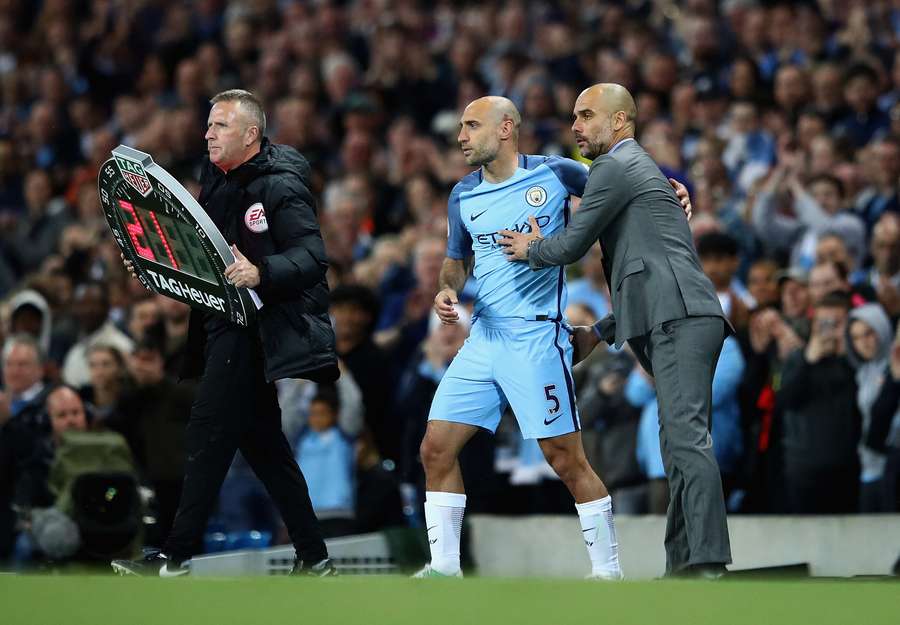
Let’s discuss Pep Guardiola’s arrival. What changed?
“Everything, in the most positive way. We had enjoyed some beautiful football under Mancini and Pellegrini, and secured trophies, but when Pep arrived, it felt as though the club was declaring: we want to win everything. Not just dominate in England — we aim to win the Champions League.
“Of course, having a managerial genius like Pep attracted the very best players. He had achieved phenomenal success at Barcelona and Bayern Munich and arrived with the same vision, philosophy, and relentless standards.
“I only worked with him for one season before I left, and during that first year we didn’t win any trophies — the squad was transitioning, and many of us were in our thirties, meaning the club needed fresh energy and legs. However, just look at what has unfolded since then.
“He has been there for over a decade, longer than he has at any other club. He has collected every trophy, shattered records for points and goals in the Premier League, and produced some of the most remarkable football I’ve ever witnessed. For anyone who loves the sport, watching Manchester City over the recent years has been a genuine joy.
What is one thing outsiders might not know about Pep Guardiola?
“He is utterly devoted — in the most admirable sense. While everyone knows he is an exceptional coach with an extraordinary playing style, what truly strikes you when you work with him is how he motivates players. He arrives in the morning already deep in thought, pondering what can be modified, what can be improved—even when the team is playing dazzling football and winning matches.
“For him, it’s never enough. He constantly questions: could this midfielder perform differently? Could this full-back push higher up? Could I utilise this player in a more advanced capacity? He has a unique ability to notice things before anyone else does, and that is what makes him remarkable.”
Given his obsession with the game, do you envision him managing a national team in the future?
“I think it’s a possibility. After City, I can’t see him managing another club in England, and I doubt he’d want to take charge of another Spanish club after Barcelona. Perhaps Germany. Italy might appeal to him; he played there as a player, and Serie A could entice him. However, I genuinely believe that at some point, he’ll take on a national team role.
“It’s a different pace — typically five international breaks a year and about eight games, rather than the extensive sixty. It’s less physically demanding as a manager, focusing on travel, observing players live, fostering relationships, and honing strategies during those concentrated windows. Two weeks on, two games, then a breather. I think he’ll get there eventually, and I can assure you that every national football federation worldwide would love to have him.”
Vincent Kompany was a prominent leader in the Manchester City dressing room. Now, he’s excelling as a manager at Bayern Munich. Did you recognise his leadership qualities from the outset?
“From day one. Vincent and I arrived at City together in 2008, spending a lot of time at the hotel during those initial weeks before securing our own flats. Even then, his immense personality and authority were apparent — he already spoke multiple languages.
“On the pitch, he was a natural leader, and through training sessions and locker room discussions, his football intelligence and understanding of the game made it clear to me that he would transition into coaching.
“What happened at Burnley raised some eyebrows — he got them promoted, then relegated also in the Premier League — but I always thought people were too quick to judge. Place a talented coach with elite players, as he now has at Bayern, and you truly see his capabilities. He also played in Hamburg, speaks German, and has a strong grasp of the culture. It all makes perfect sense. I’m genuinely thrilled for him.”
Lastly, let’s talk about Carlos Tevez and Mario Balotelli. They had very different character traits. What distinguished them, and did you share a particular connection with Carlos due to your similar backgrounds?
“Carlos was an incredible signing, especially coming from Manchester United — I’ll never forget that image of him on the massive billboard saying ‘Welcome to Manchester’ in a blue shirt.
“I already knew Carlos from playing together in Argentina’s youth teams, so I was well aware of his brilliance. In training, he had an interesting approach — he wouldn’t exhaust himself from Monday to Friday; he preferred to do things his own way. But when the weekend arrived, he was the one winning matches for us. That was his gift.
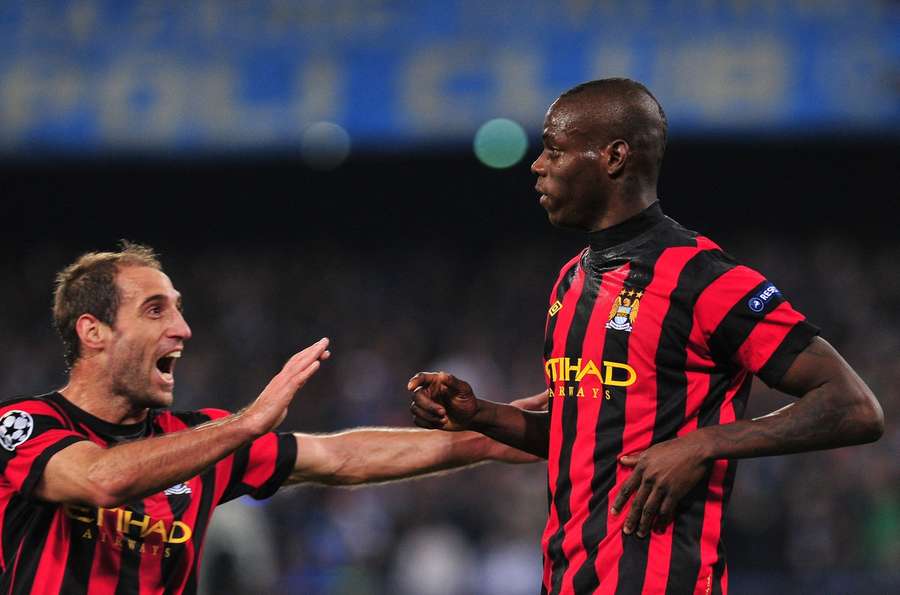
“Mario is someone I chuckle about whenever he comes to mind. Mancini had worked with him at Inter when Mario was very young — just 19 or 20 — and he genuinely believed Mario could evolve into the next great striker. His ability was undeniable; he was fast, had a powerful shot, was technically skilled, and I never saw him miss a penalty. He possessed extraordinary talent.
“The unfortunate side was his inability to fully commit to the professional aspects — the routine of training well, recovering properly, eating right, and focusing entirely on football. At that level, particularly with the fierce competition he faced from Aguero, (Edin) Dzeko, and Tevez, you needed to give your best every day.
“Moreover, there was the constant commotion off the pitch. Every morning at breakfast, without fail, some fresh drama involving Mario would surface. However, I’ll say this — Manchester City fans adored him, as they should have. That assist to Agüero against QPR and the infamous ‘Why Always Me?’ goal against United have become indelible moments in the club’s lore.
“As a former teammate, I hold a great affection for him. He was a remarkable lad who perhaps required more time to mature. I hope people remember the footballer he was because he was genuinely exceptional.”
Following your departure from City, you joined West Ham. How do you reflect on that chapter?
“Very fondly. It was a completely different environment, of course — shifting from a club with genuine aspirations for trophies to one frequently battling to maintain league status. However, I was 33 at that time and in search of something different.
“West Ham was always a daunting ground to visit — the atmosphere at the old Upton Park was uniquely intense. Moving to London was also a wonderful transition for my family. At that stage in your career, you start contemplating life beyond football — considering quality of life and what the city can offer your family outside the game.
“I spent three years there, working under (Slaven) Bilic, David Moyes, and Manuel Pellegrini, whom I already knew from City. There were genuinely challenging moments — times when we peeked at the relegation zone — but equally memorable ones.
“The London Stadium houses 60,000 fans, and they consistently filled it for every home match. East London is West Ham through and through. Walking through Canary Wharf, you could see claret and blue everywhere. It was a fantastic experience, and I have a deep affection for the club.”
“This season has been tough for them, but they’ve shown some positive signs lately. They’re only a few points behind Nottingham Forest and even Tottenham, who are also facing struggles. I sincerely hope they stay up. I know people at the club, and I have a lot of warmth for West Ham.
“They secured the Conference League title, marking a historic moment for them, and a club of their stature deserves to be in the Premier League.”
Compiled by SportArena.au
Fanpage: SportArena.au.
LiveScore – Live Sports Results & Odds.