


Players on the women’s tennis circuit who are expecting will now benefit from a 12-month paid maternity leave, while those becoming parents through partner pregnancy, surrogacy or adoption are entitled to two months of paid leave. This initiative, endorsed by the Public Investment Fund of Saudi Arabia, was unveiled by the WTA.
“Typically, independent contractors and self-employed individuals do not enjoy such maternity benefits,” stated WTA CEO Portia Archer. “They usually have to navigate and secure these benefits on their own. This is truly a groundbreaking development.”
More than 300 players are eligible for this fund, which is applicable retroactively from January 1. However, details regarding the financial aspects have not been disclosed by the WTA.
The programme, regarded by the WTA as “the first time comprehensive maternity benefits are being offered to independent, self-employed athletes in women’s sports history,” also includes grants for fertility treatments, such as egg freezing and IVF.
This initiative is part of a broader movement as women’s sports continue to gain prominence, with a focus on addressing maternity and parental needs.
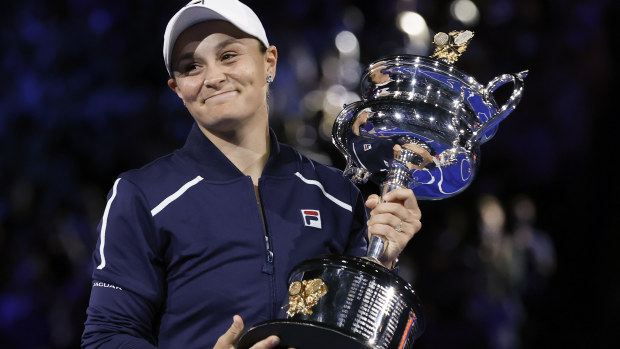
Ash Barty of Australia celebrates after winning the Daphne Akhurst Memorial Cup. AP Photo/Hamish Blair
Currently, there are 25 mothers competing on tour; among them is Belinda Bencic, an Olympic gold medalist, who recently claimed a title in October after returning from maternity leave.
A growing number of tennis professionals are returning to competition after having children, including former number one players and Grand Slam champions such as Serena Williams, Naomi Osaka, Kim Clijsters, Caroline Wozniacki, and Victoria Azarenka.
Azarenka, a member of the WTA Players’ Council, which Archer highlighted as instrumental in advocating for this funding, believes that these benefits will motivate lower-ranked or lower-earning athletes to take the necessary time off after becoming parents without the fear of income loss from not competing in tournaments.
“This is indeed one of the objectives of the programme: to offer financial resources, flexibility, and support, enabling these athletes, particularly those with lower earnings, to make choices about when and how they wish to start their families,” said Archer.
Azarenka suggested that these changes might encourage players to consider parenthood before fully stepping away from their careers.

Serena Williams and Caroline Wozniacki. Getty
“The feedback we’ve received from both mothers and non-mothers is overwhelmingly positive,” remarked Azarenka, the 2012-13 Australian Open champion, whose son Leo is 8. “I truly believe this could transform the dialogue around sports. Moreover, it extends beyond sports — it’s a global discussion, and I’m proud that we are participating in it.”
In recent years, the WTA has also taken significant steps to support players by encouraging more women to take on coaching roles, launching safeguarding measures, tackling cyberbullying, and striving for parity in prize money with male competitors in the sport.
The Public Investment Fund (PIF) became a global partner of the WTA last year, following intense public discourse — with Hall of Famers Chris Evert and Martina Navratilova among those criticising the PIF due to concerns around LGBTQ+ and women’s rights in Saudi Arabia.
The kingdom now hosts the season-concluding WTA Finals in addition to an ATP event catering to emerging male players. The PIF is also sponsoring the WTA and ATP rankings.
Compiled by SportArena.com.au.
Fanpage: SportArena.com.au.
LiveScore – Live Sports Results & Odds.
