


Two-time Olympic gold medallist Caster Semenya expressed her dissatisfaction with IOC President Kirsty Coventry on Monday (AEDT) regarding the recent ruling to prohibit transgender women athletes from competing in women’s events at the Olympics.
The South African runner, Semenya, indicated that she anticipated more support from a fellow African woman in a leadership position like Coventry, who hails from Zimbabwe.
“Personally, as an African leader, I would expect her to comprehend our struggle, particularly given the context of the global South. You cannot dictate genetics,” Semenya remarked during a press conference held in Cape Town after a women’s race celebrating female empowerment, unity, and community.
“For me, knowing her background as a woman from Africa, she should be aware of how these issues impact African women and women in the global South.”
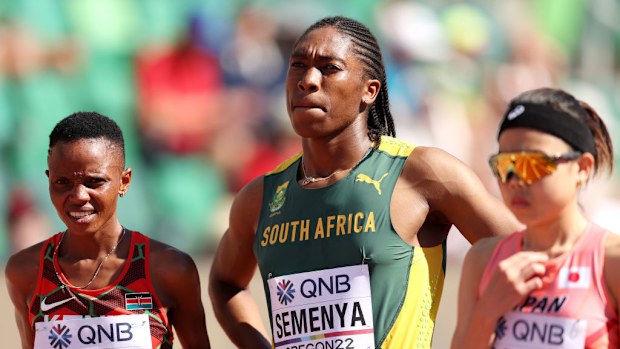
Caster Semenya of Team South Africa. Getty
Semenya spoke out three days following the International Olympic Committee’s announcement that transgender women would be barred from participating in women’s events at the Olympics or any event sanctioned by the IOC.
This ruling, outlined in a 10-page policy document, also imposes limitations on female athletes like Semenya who possess medical conditions known as differences in sex development (DSD).
“If we’re discussing science, as we are, and if the science is indeed clear, then show us the decision-makers and don’t wrap that up in falsehoods,” Semenya asserted.
“It’s a misconception, and we know it; should we confront Kirsty, that’s how we’ll respond, and we’ll respond with strength because it impacts women.”
“We’re discussing human rights and diversity here. As an organisation like the IOC, if you’re advocating for diversity, you need to act accordingly.”
Semenya, who was assigned female at birth in South Africa and has testosterone levels above the standard female range, has secured two Olympic golds in the 800 metres event.
Since 2019, she has been barred from competing in her preferred race at major international events such as the Olympics and world championships due to her refusal to adhere to regulations requiring her to take medication to lower her hormone levels artificially.
“In my view, our voices are not being embraced; it feels like you’re just ticking a box, claiming that you’ve consulted,” she said.
“It’s merely tokenism.”
Semenya, alongside other track athletes like India’s Dutee Chand, has legally challenged earlier iterations of their sport’s eligibility regulations.
As the 2024 Paris Olympics approach, three major sports—track and field, swimming, and cycling—have enforced exclusionary policies against transgender women who have gone through male puberty.
Semenya previously won a ruling from the European Court of Human Rights in her lengthy legal battle against the track and field regulations, yet this did not lead to their abolishment.
Last year, she announced the conclusion of her seven-year legal battle concerning sex eligibility rules, despite the prior legal victory.
The eligibility guidelines set to be effective from the Los Angeles Olympics in July 2028 have been reportedly crafted to “protect fairness, safety, and integrity in the female category,” according to the IOC’s announcement on Friday (AEDT).
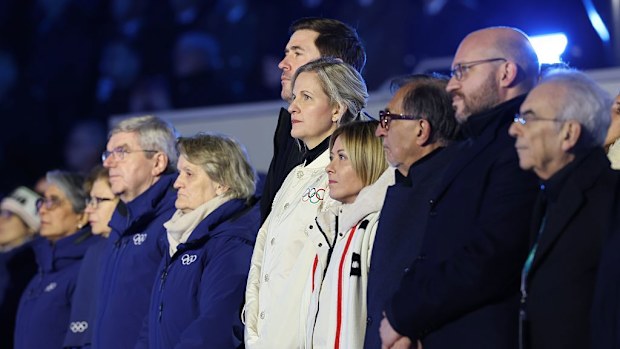
IOC President Kirsty Coventry at the closing ceremony of the Milan-Cortina 2026 Olympic Winter Games. Xinhua News Agency via Getty Images
The number of transgender women competing at an Olympic level remains unclear. At the 2024 Paris Summer Games, no woman who transitioned from male has been reported to compete, although New Zealand weightlifter Laurel Hubbard participated in the Tokyo Olympics in 2021 without earning a medal.
According to the IOC, last week’s ruling is not retroactive and does not extend to any grassroots or recreational sports programmes.
The IOC’s Olympic Charter asserts that access to sports is a fundamental human right.
Compiled by SportArena.au.
Fanpage: SportArena.au.
LiveScore – Live Sports Results & Odds.
